
Punjab Huawei AI Initiative 2026: Training for 1,000 Master Trainers and Six Data Centres
The Punjab Huawei AI Initiative 2026 is a planned collaboration between the Government of Punjab and Huawei focused on artificial intelligence training, cloud computing, data infrastructure and technology-enabled public services.
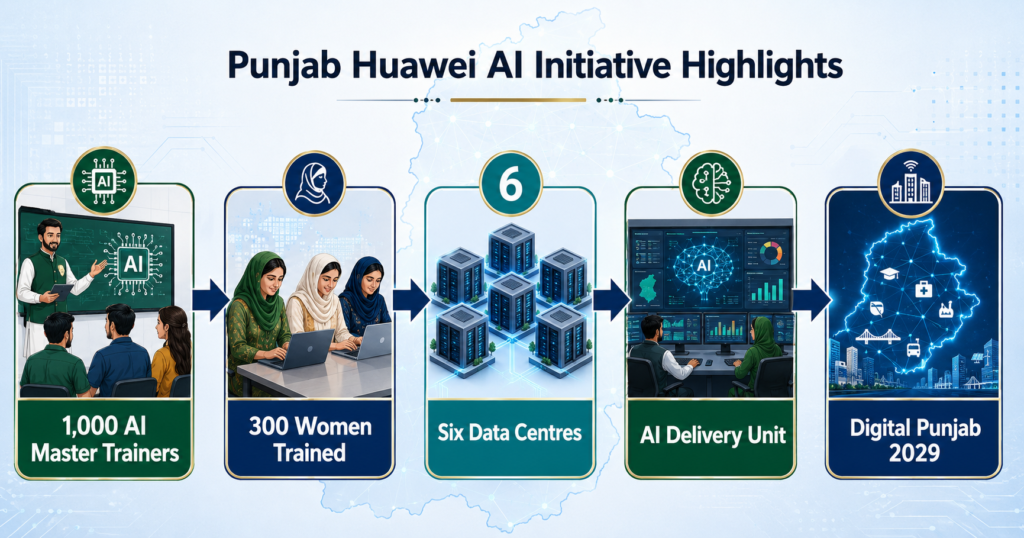
The initiative was discussed during a meeting in China between Punjab Chief Minister Maryam Nawaz Sharif and senior Huawei officials. The two sides agreed to train 1,000 young people from Punjab as Huawei AI master trainers, while 300 women will receive separate AI training from the technology company.
The meeting also reviewed a proposal to establish an Artificial Intelligence Delivery Unit and discussed the development of six data centres, including a sovereign data centre, at the Nawaz Sharif IT City.
The collaboration could create new learning and employment opportunities for students, graduates, teachers, freelancers and technology professionals. However, a public application portal, eligibility criteria, training dates, course duration and selection procedure had not been announced when this guide was last updated.
Anyone interested in applying should wait for an official announcement from the Government of Punjab, Punjab AI Office, Huawei or another designated government department.
Punjab Huawei AI Initiative: Quick Overview
| Program detail | Announced information |
|---|---|
| Initiative | Punjab–Huawei AI and digital cooperation |
| Province | Punjab, Pakistan |
| Technology partner | Huawei |
| Main training target | 1,000 young people as Huawei master trainers |
| Separate women’s training | 300 women |
| Proposed data centres | Six |
| Proposed special facility | Sovereign data centre |
| Proposed administrative body | Artificial Intelligence Delivery Unit |
| Main location discussed | Nawaz Sharif IT City |
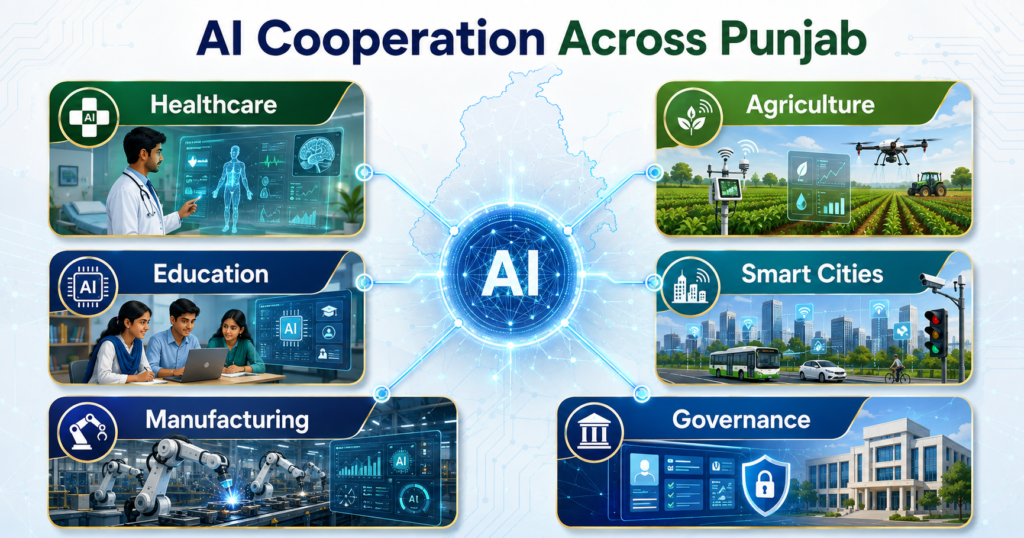
| Target sectors | Healthcare, education, agriculture, manufacturing, governance and smart cities |
| Long-term target | AI-integrated and interconnected Punjab by 2029 |
| Application status | Public registration not yet announced |
| Training fee | Not announced |
| Stipend | Not announced |
| Course duration | Not announced |
What Is the Punjab Huawei AI Initiative?
The Punjab Huawei AI Initiative is a broad technology cooperation plan intended to strengthen Punjab’s ability to use artificial intelligence, cloud services and digital infrastructure.
It is not limited to a single training course. The discussions cover several connected areas:
- Training young people in artificial intelligence
- Developing AI master trainers
- Providing separate AI training opportunities for women
- Establishing data centres
- Exploring a sovereign data centre
- Creating an AI Delivery Unit
- Developing locally relevant AI models
- Expanding cloud-computing capacity
- Supporting smart public services
- Applying AI in healthcare, education and agriculture
- Encouraging investment in the Nawaz Sharif IT City
The initiative therefore combines skills development with physical infrastructure and government digital transformation.
Punjab does not only need people who understand artificial intelligence. It also needs secure data centres, cloud services, computing capacity, governance standards and public institutions capable of using the technology responsibly.
The proposed partnership with Huawei appears designed to work on these requirements together.
Huawei to Train 1,000 AI Master Trainers
The most important confirmed training component is the plan to train 1,000 young people from Punjab as Huawei master trainers.
A master-trainer model generally prepares selected participants to become advanced trainers who can transfer their knowledge to other students, teachers, government employees or technology professionals.
Instead of training only 1,000 people for personal career development, this model could create a larger pool of AI instructors across Punjab. If each master trainer later trains additional participants, the program’s indirect reach may become much wider.
However, the exact responsibilities of the selected master trainers have not yet been publicly explained. Official authorities still need to announce:
- Subjects included in the training
- Required educational qualifications
- Whether coding experience will be necessary
- Course duration
- Training locations
- Online or physical learning arrangements
- Assessment procedure
- Certification requirements
- Post-training teaching responsibilities
- Whether successful participants will receive employment opportunities
Until these details are formally released, applicants should not assume that the program will operate like an ordinary short course.
Separate AI Training for 300 Women
Huawei is also expected to provide separate AI training to 300 women.
This component is significant because women remain underrepresented in several advanced technology fields. Dedicated training can help women develop practical expertise in AI, data analysis, cloud technologies and digital services.
Potential beneficiaries may include:
- Female university students
- Recent graduates
- Computer science students
- Software engineers
- Female lecturers and teachers
- Freelancers
- Entrepreneurs
- Government employees
- Women returning to professional work
- Professionals shifting into technology careers
The official reports do not yet explain whether the 300 women are included in the total of 1,000 master trainers or form a separate group. Some reports describe the women’s training separately, but applicants should wait for the official advertisement to confirm the final number of seats.
The eligibility rules, age limit, domicile conditions and minimum qualifications for women have also not been announced.
Proposed Artificial Intelligence Delivery Unit
The meeting reviewed a proposal to create an Artificial Intelligence Delivery Unit in Punjab.
A delivery unit is generally established to convert government plans into measurable projects. If formally created, the AI Delivery Unit may help coordinate AI programs across different provincial departments.
Its possible responsibilities could include:
- Identifying public services that can benefit from AI
- Coordinating projects between government departments
- Establishing technical and data standards
- Tracking the progress of AI projects
- Evaluating pilot programs
- Supporting responsible procurement
- Measuring outcomes
- Coordinating with technology partners
- Protecting citizen data
- Developing rules for safe and ethical AI use
These responsibilities are reasonable possibilities based on the usual role of delivery units, but the Punjab government has not yet published the proposed unit’s complete mandate.
The initiative should therefore be described as a proposal under review, rather than an already operational application authority.
Six Data Centres at Nawaz Sharif IT City
Punjab and Huawei also discussed establishing six data centres at the Nawaz Sharif IT City.
Data centres contain the servers, storage systems, networking equipment and security infrastructure required to operate digital platforms and AI applications.
Advanced artificial intelligence systems require substantial computing and data-processing capacity. Without reliable infrastructure, government departments may struggle to deploy AI securely and at scale.
The planned data centres could potentially support:
- Government databases
- Cloud-based public services
- AI model development
- Secure information storage
- Healthcare information systems
- Educational technology platforms
- Smart-city systems
- Traffic-management applications
- Agriculture-monitoring tools
- Disaster-management platforms
- Digital identity and verification systems
The final role of each data centre has not yet been announced. Details concerning construction schedules, capacity, cost, ownership, procurement and cybersecurity arrangements remain to be published.
What Is a Sovereign Data Centre?
Among the six facilities discussed is a sovereign data centre.
A sovereign data centre is designed to store and process sensitive information within a jurisdiction governed by local laws and regulatory controls. It can reduce dependence on foreign data-hosting infrastructure and help public institutions maintain greater control over important information.
For Punjab, a sovereign facility could be relevant to:
- Government records
- Citizen-service platforms
- Healthcare information
- Education databases
- Public-safety systems
- Administrative records
- Locally developed AI models
- Confidential departmental information
A sovereign data centre does not automatically guarantee privacy or security. Strong cybersecurity, access controls, encryption, independent audits, backup systems and clear data-protection policies are still required.
The reports confirm that such a centre was discussed, but they do not indicate that it has already been constructed or launched.
Huawei Investment in Nawaz Sharif IT City
Chief Minister Maryam Nawaz invited Huawei to invest in the Nawaz Sharif IT City.
The IT City is being positioned as a centre for technology businesses, digital services, research, education and investment. Huawei’s participation could help attract further international technology partnerships and contribute technical experience in cloud computing, networking and digital infrastructure.
Possible areas of investment discussed include:
- Data-centre infrastructure
- Cloud-computing services
- AI research and development
- Training facilities
- Smart-city technologies
- Digital public-service platforms
- Technology incubation
- Industry-academia cooperation
An invitation to invest should not be treated as confirmation of a completed financial investment. The value, timetable and contractual structure of any Huawei investment were not specified in the reports reviewed for this article.
Sectors Covered by the Punjab–Huawei Cooperation
The discussions covered multiple sectors rather than focusing only on technology education.
Smart Cities
AI can support smart-city functions such as traffic monitoring, public safety, emergency response, environmental monitoring and municipal-service management.
Punjab already uses technology through institutions such as the Safe Cities Authority. The new cooperation could expand the use of data analytics and automation in urban administration.
Command and Control Centres
Command centres bring information from cameras, sensors, emergency services and public departments together in one location.
AI may help analyse large data streams, identify unusual events and support faster decision-making. Such systems also require strong safeguards to prevent misuse of personal data or excessive surveillance.
Healthcare
AI can assist healthcare professionals with medical imaging, risk assessment, hospital planning, patient monitoring and clinical decision support.
According to the Punjab AI Office briefing reported by the media, AI has already been applied in Punjab’s healthcare activities, including technology connected with heart transplantation.
AI must remain a support tool rather than a substitute for qualified doctors. Any clinical AI system should undergo medical validation and operate under professional supervision.
Education
The Punjab government is working to introduce AI into government educational institutions. The initiative may support teacher training, digital learning platforms, student skill development and the use of AI tools in classrooms.
Students should learn both how to use AI and how to verify its outputs. Responsible AI education should include privacy, misinformation, academic integrity and online safety.
Agriculture
Artificial intelligence can help farmers and government departments analyse weather, crop health, soil conditions, pest risks and market information.
Potential applications include:
- Crop-disease detection
- Precision irrigation
- Yield forecasting
- Pest monitoring
- Satellite-image analysis
- Weather-based recommendations
- Agricultural supply-chain planning
The reports indicate that AI is already being used in Punjab’s agriculture sector, although specific projects covered by the Huawei cooperation have not been identified.
Manufacturing
Manufacturers can use AI for quality control, predictive maintenance, production planning and energy management.
Technology infrastructure and skilled workers could help Punjab’s industries improve efficiency and compete in export markets.
Government Services
AI may help departments manage documents, answer routine citizen questions, identify service delays and analyse administrative data.
Public-sector automation should include human review, appeal mechanisms and transparent rules. Citizens should not be denied a service solely because of an unexplained automated decision.
Punjab AI Office and the 2029 Digital Target
Special Assistant to the Chief Minister on Artificial Intelligence and Special Initiatives Ali Dar briefed the meeting on the work of the Punjab AI Office.
According to the briefing reported by multiple news organizations, Punjab is targeting an AI-integrated and interconnected system by 2029.
Achieving this goal would require more than buying technology. Punjab would need to develop:
- Skilled AI professionals
- Secure digital infrastructure
- Reliable government data
- Departmental coordination
- Cybersecurity standards
- Privacy protections
- AI procurement rules
- Ethical-use policies
- Monitoring and accountability systems
- Public awareness and digital literacy
The Huawei collaboration may provide training and infrastructure support, but implementation will depend on detailed projects, budgets and governance arrangements.
Who May Be Eligible for Huawei AI Training?
Official eligibility requirements have not yet been published.
The training may eventually target students, graduates, teachers, freelancers, government employees or existing technology professionals. However, these categories remain possibilities until an official advertisement is issued.
The final criteria may consider:
- Punjab domicile
- Age
- Educational qualification
- Academic field
- Computer literacy
- Programming knowledge
- Employment status
- Teaching experience
- Gender-specific seat allocation
- Availability for physical training
- Ability to pass an entry assessment
Interested candidates should not rely on unofficial eligibility-checking websites.
How to Apply for the Punjab Huawei AI Initiative
As of September 1, 2026, the reviewed announcements do not provide a dedicated public application portal.
No verified registration link, SMS code, application deadline or selection test has been announced.
Once registration opens, applicants should look for an announcement through:
- The Government of Punjab’s official website
- Punjab AI Office’s verified social-media accounts
- Huawei Pakistan’s official channels
- Punjab Information Technology Board
- Higher Education Department Punjab
- Technical Education and Vocational Training Authority
- Relevant Punjab universities
- The official Nawaz Sharif IT City platform
The exact organization managing applications has not yet been identified publicly.
Documents Applicants May Need
The following is a preparation checklist, not an official document list:
- Valid CNIC or B-Form
- Punjab domicile
- Recent photograph
- Active mobile number
- Email address
- Academic certificates
- University transcript
- Degree or enrolment certificate
- Updated CV
- Experience certificate, if applicable
- Evidence of technical certifications
- Proof of employment or teaching experience
- Disability certificate if reserved seats are announced
Applicants should wait for the official advertisement before obtaining unnecessary documents or paying any fee.
Will the Training Be Free?
The reports do not state whether participants will pay a course fee.
Because the training is being discussed as a government-supported cooperation initiative, it may be subsidized or free for selected participants. However, this cannot be confirmed until official terms are released.
Candidates should also wait for confirmation regarding:
- Registration charges
- Examination fees
- Certification costs
- Travel allowance
- Accommodation
- Laptop provision
- Internet support
- Monthly stipend
No stipend has been announced in the information reviewed for this article.
Will Participants Receive Huawei Certification?
Huawei commonly provides professional training and certification through its wider education programs, but the exact certification arrangement for this initiative has not been announced.
The term “Huawei master trainers” suggests that selected participants may receive structured instruction from Huawei. Still, readers should not assume that a particular Huawei certification examination is included unless the official advertisement says so.
Important details to verify will include:
- Certification name
- Examination requirements
- Certificate validity
- International recognition
- Retake policy
- Examination fee
- Trainer authorization
- Continuing professional-development requirements
Also, check Chief Minister Cancer Initiative 2026: Free Treatment Up to Rs. 10 Lakh in Punjab
Possible Benefits for Students and Professionals
If properly implemented, the initiative could provide several advantages.
Advanced Technical Skills
Participants may gain practical knowledge of AI, cloud computing, data management and digital services.
Training Opportunities
Master trainers may have opportunities to teach AI skills to larger groups in universities, colleges, training centres or government departments.
Better Employment Prospects
AI skills can support careers in software engineering, data analysis, automation, cloud services, cybersecurity and digital transformation.
Support for Freelancers
Freelancers may use AI skills to offer automation, analytics, chatbot, content-processing and software-development services to international clients.
More Opportunities for Women
The separate training component for 300 women could improve women’s access to advanced technology education and professional networks.
Stronger Public Services
Government departments may use trained professionals and improved infrastructure to develop more efficient citizen services.
Important Questions Still Unanswered
Although the initiative is promising, several important details are still pending:
- When will applications open?
- What will be the age limit?
- Will only Punjab domicile holders qualify?
- What qualifications will be required?
- Are the 300 women included in the 1,000 total?
- Will training be online or physical?
- Where will training centres be located?
- How long will the training last?
- Will participants receive a stipend?
- Will laptops be provided?
- What certification will be awarded?
- How will master trainers be selected?
- Will participants receive employment after training?
- When will construction of the six data centres begin?
- What will the project cost?
- Which department will manage the AI Delivery Unit?
- What privacy and cybersecurity standards will apply?
These questions should be answered through an official program document or advertisement before candidates make application decisions.
Fraud and Fake Registration Warning
High-demand government programs often attract fake websites and social-media pages.
To stay safe:
- Do not pay an agent for guaranteed selection.
- Do not submit your CNIC to an unofficial eligibility checker.
- Do not share an OTP with anyone.
- Do not send money through a personal bank or mobile-wallet account.
- Do not trust a WhatsApp registration form without official confirmation.
- Check the website domain carefully.
- Verify advertisements through an official Punjab or Huawei channel.
- Keep screenshots and receipts if an official payment is ever required.
- Report suspicious links rather than forwarding them.
Frequently Asked Questions
Final Words
The Punjab Huawei AI Initiative 2026 could become an important part of Punjab’s digital transformation strategy. Its major elements include training 1,000 AI master trainers, providing separate AI training to 300 women, discussing six data centres and considering an Artificial Intelligence Delivery Unit.
The initiative also covers potential AI applications in healthcare, education, agriculture, manufacturing, smart cities and government services.
However, the current announcement represents the beginning of a larger process. Important implementation details—including applications, eligibility, training dates, course content, stipends and data-centre timelines—remain pending.
Students and professionals should prepare their basic documents and improve their digital skills, but they should apply only through a verified official platform once registration is formally announced.
Disclaimer: This article is provided for informational purposes and is not an official government or Huawei announcement. Program details, seat numbers, eligibility conditions and implementation plans may be revised. Always verify the latest information through official channels before applying or paying any fee.