Children Heart Surgery Program: Free Treatment Guide
The Children Heart Surgery Program is a major healthcare initiative of the Punjab government designed to provide free cardiac treatment and life-saving operations to children suffering from serious heart conditions. It helps families who may otherwise be unable to arrange timely or affordable pediatric cardiac care.
Heart surgery can cost hundreds of thousands or even millions of rupees, depending on the child’s condition and the complexity of the procedure. Such expenses are beyond the means of many households. Delayed treatment can also cause complications, permanent health problems or loss of life.
Through this initiative, eligible children can receive diagnostic assessments, cardiac procedures, hospital admission and post-operative care without paying the normal cost of treatment. When space is unavailable in participating government hospitals, patients may be referred to an approved private hospital.
The official Punjab government overview states that more than 5,000 children were estimated to die annually because they could not obtain timely heart surgery. The Children Heart Surgery Program was introduced to reduce this treatment gap, shorten waiting lists and expand the capacity of pediatric cardiac units.
Important update: Program statistics change as new patients are registered and treated. The Punjab Health Initiative Management Company’s online counter showed 13,929 patients treated under the Chief Minister Children Heart Program when checked in July 2026. Families should confirm current information with an authorized hospital or official helpline.
What Is the Children Heart Surgery Program?
The Children Heart Surgery Program, sometimes described in media coverage as Maryam Ki Masihaai, is an initiative launched under Punjab Chief Minister Maryam Nawaz Sharif. Its central purpose is to provide timely, quality and free cardiac care to children who require surgical intervention.
The program initially started through six public and private hospitals in Lahore, Multan and Rawalpindi. Expansion to hospitals in other Punjab districts was planned for subsequent phases.
Unlike a simple financial-assistance scheme, the initiative connects patients with a complete treatment system. It coordinates registration, medical evaluation, urgency assessment, hospital allocation, surgery and follow-up care.
A centralized digital dashboard developed by the Punjab Information Technology Board supports the initiative by helping medical teams manage electronic patient records and monitor cases.
Main Objectives of the Scheme
The Children Heart Surgery Program has several important objectives:
- To save children suffering from life-threatening heart diseases
- To provide free pediatric cardiac surgery to eligible patients
- To reduce long waiting lists at government cardiac hospitals
- To refer patients to partner private hospitals when public facilities are full
- To increase the number of pediatric surgeons and trained medical staff
- To improve cardiac wards, high-dependency units and recovery facilities
- To prioritize urgent cases through medical assessment
- To maintain transparent digital records of registered patients
- To provide relief to parents facing unaffordable medical expenses
By involving government and private hospitals, the scheme aims to make specialist treatment available more quickly.
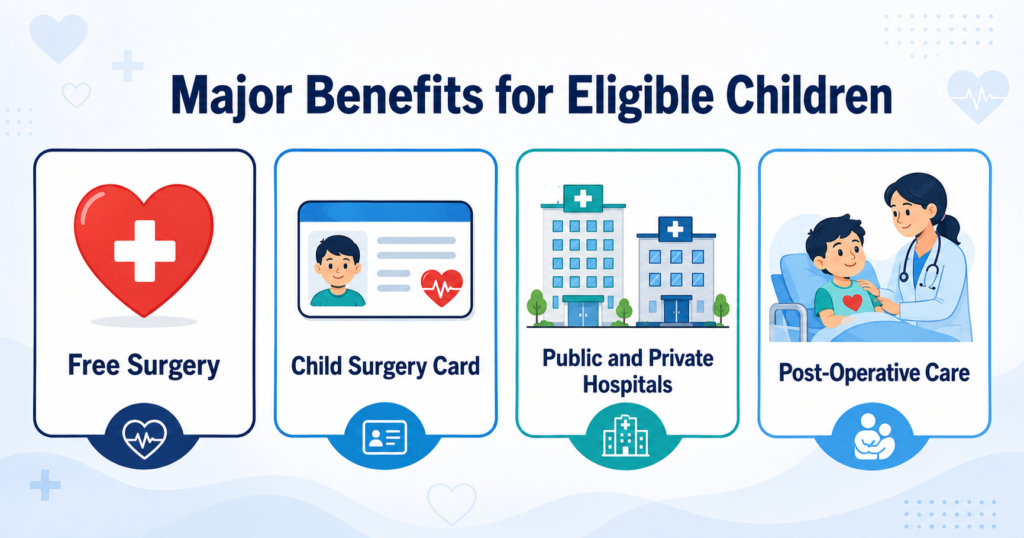
Key Benefits at a Glance
| Feature | Program benefit |
|---|---|
| Treatment cost | Eligible treatment is provided free of charge |
| Hospital access | Public and participating private hospitals |
| Patient document | Child Surgery Card for approved patients |
| Medical procedures | Open-heart and other required cardiac procedures |
| Diagnostics | Tests required for assessment and surgical planning |
| Hospital care | Admission, surgery and recovery support |
| Case priority | Critical patients are prioritized medically |
| Monitoring | Centralized online dashboard and electronic records |
| Geographic reach | Punjab receives priority, with cases from other regions also reported |
Parents seeking additional financial assistance can also read our CM Punjab Rahmat Card App download and registration guide for information about another provincial welfare initiative.
Who Can Receive Free Treatment?
The program primarily serves children diagnosed with heart conditions that require surgery or another approved cardiac procedure. Each patient must undergo specialist evaluation before approval.
A child may be considered when:
- The child is suffering from congenital or another serious heart condition.
- A qualified pediatric cardiologist recommends surgery or intervention.
- The patient falls within the age requirements applied by the program.
- The family completes registration and identity verification.
- The medical team confirms that the required procedure is covered.
- A participating hospital accepts and schedules the case.
Punjab residents are the main beneficiaries. However, official reporting has also referred to patients from Sindh, Khyber Pakhtunkhwa, Balochistan, Islamabad, Azad Jammu and Kashmir, and Gilgit-Baltistan. Admission of patients from outside Punjab may depend on current policy, medical urgency and hospital capacity.
Families should not assume approval solely on the basis of financial hardship. Final eligibility and treatment decisions are made by the authorized medical and administrative teams.
Low-income families struggling with food expenses may also learn about the Punjab Sanjhi Sabzi Scheme for free seasonal vegetables
Medical Conditions That May Be Covered
The Children Heart Surgery Program mainly focuses on serious pediatric cardiac conditions. Coverage depends on the diagnosis and recommendation of specialists, but relevant cases may include:
- Congenital heart defects present from birth
- Holes in the heart, including ASD or VSD
- Abnormal connections between blood vessels
- Heart-valve defects
- Obstructed or narrowed cardiac pathways
- Complex structural heart abnormalities
- Conditions requiring open-heart surgery
- Cases suitable for minimally invasive or catheter-based procedures
A pediatric cardiologist must examine the child and determine the appropriate course of treatment.
Services Provided to Patients
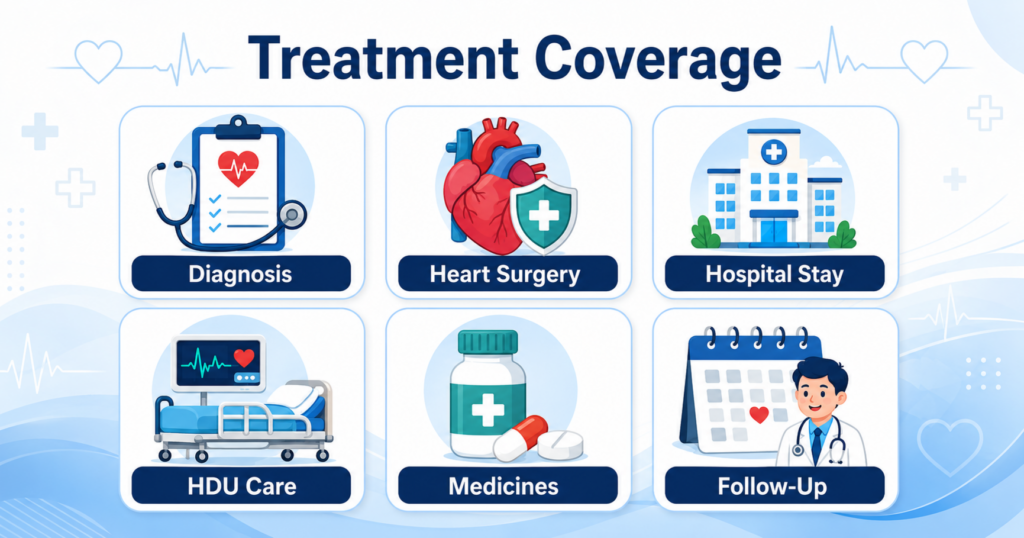
The initiative is designed to offer comprehensive care instead of covering only the operation. Depending on clinical requirements and approval, services may include:
Diagnostic Assessment
Children may receive an echocardiogram, ECG, blood tests, imaging and specialist consultation. These assessments help doctors confirm the diagnosis and prepare an appropriate treatment plan.
Pediatric Heart Surgery
The Children Heart Surgery Program supports approved cardiac procedures, including open-heart operations and treatment of congenital abnormalities. Surgical decisions depend entirely on the child’s medical condition.
Minimally Invasive Procedures
Some heart conditions can be treated through catheter-based procedures rather than traditional open surgery. The medical team decides whether this option is safe and suitable.
Hospital Admission
Coverage may include the hospital stay, nursing services, operating-room facilities and required medical equipment.
Post-Operative Care
After surgery, a child may require monitoring in an intensive care unit or high-dependency unit. Medicines, follow-up assessments and recovery support related to the approved treatment may also be provided.
Families should confirm the exact coverage with the hospital before treatment because services are based on the approved package and medical need.
Documents Required for Registration
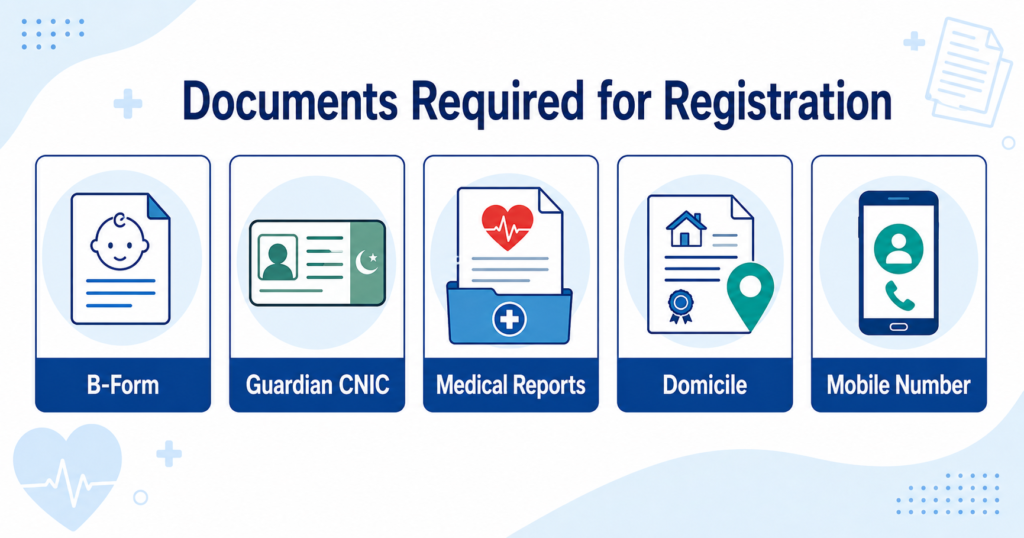
Parents or guardians should prepare the following documents before visiting a participating hospital:
- Child’s computerized B-Form issued by NADRA
- Original CNIC of the parent or legal guardian
- Copies of the guardian’s CNIC
- Child’s recent photographs, if requested
- Domicile or proof of residence
- Previous medical records
- Echocardiography, ECG and laboratory reports
- Prescription or referral from a qualified doctor
- Hospital registration or patient slip
- Guardian’s active mobile number
Hospitals may request additional documents according to the case. Carry the original documents as well as photocopies to avoid unnecessary delays.
How to Apply for the Children Heart Surgery Program
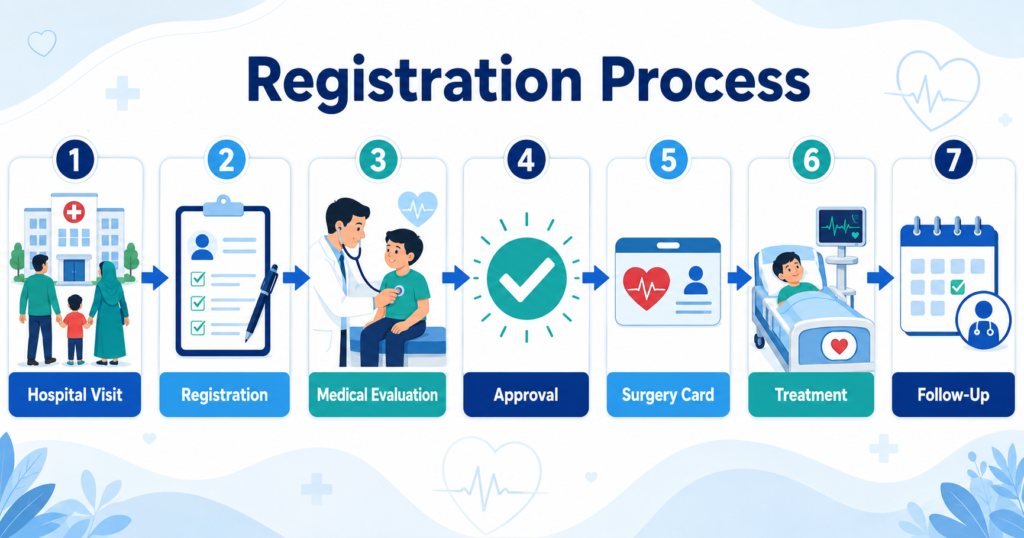
The registration process generally involves the following steps:
Step 1: Visit an Authorized Hospital
Take the child to a participating public hospital or designated cardiac centre. Bring the child’s B-Form, guardian’s CNIC and available medical reports.
Step 2: Complete Patient Registration
Hospital staff enter the patient’s identity, contact information and medical history into the centralized system.
Step 3: Obtain a Medical Evaluation
A pediatric cardiologist examines the child and may order an echocardiogram, ECG, laboratory tests or other diagnostic procedures.
Step 4: Receive an Urgency Assessment
The medical team categorizes the case according to severity. Emergency and critical cases may receive priority over stable cases.
Step 5: Wait for Approval and Scheduling
Once approved, the patient is placed on the surgical schedule. The family should ensure its registered phone number remains active for hospital updates.
Step 6: Receive the Child Surgery Card
Eligible patients may receive a Child Surgery Card that facilitates access to covered treatment and helps identify the approved case.
Step 7: Attend the Scheduled Treatment
The child is admitted to the allocated hospital for the approved procedure. If an appropriate government bed is unavailable, referral to an approved private hospital may be considered.
Step 8: Complete Follow-Up Visits
Parents must follow discharge instructions, administer prescribed medicines and attend scheduled check-ups.
What Is the Child Surgery Card?
The Child Surgery Card is an identification and facilitation document issued to approved patients under the Children Heart Surgery Program. It connects the patient’s case with the official system and helps participating hospitals verify treatment authorization.
Parents should keep the card safe and bring it to every relevant appointment. Receiving a card does not mean parents may choose any private hospital independently. Treatment must be obtained through the hospital and referral arrangements authorized by the program.
Participating Hospitals and Referral System
The first phase involved six public and private facilities, initially operating in Lahore, Multan and Rawalpindi. The government also announced plans to extend pediatric cardiac services to additional districts.
Hospital availability may change as new facilities are empanelled or capacity is expanded. Therefore, families should obtain the current hospital list from the official department instead of relying on an old social-media post.
A key benefit of the Children Heart Surgery Program is its referral arrangement. If a participating government hospital has no available capacity, an eligible patient may be shifted to an approved private facility where the authorized treatment is provided under the scheme.
How the Online Dashboard Works
The centralized dashboard developed by PITB manages important stages of the patient journey. Its functions include:
- Secure patient registration
- Electronic medical records
- Diagnosis and case-history management
- Assessment of medical urgency
- Surgery and appointment scheduling
- Tracking of procedures
- Monitoring treatment progress
- Maintaining program-level statistics
This digital structure makes it easier to follow each case and helps administrators assess waiting times and hospital performance.
Important Instructions for Parents
Parents seeking free heart surgery should follow these precautions:
- Apply only through official hospitals or authorized centres.
- Do not pay an agent to obtain registration or approval.
- Never share CNIC details through an unverified social-media page.
- Keep medical reports organized and carry them to every visit.
- Provide an active mobile number during registration.
- Attend appointments on time.
- Inform the hospital if the child’s health suddenly worsens.
- Ask the treating doctor to explain the procedure, risks and recovery plan.
- Confirm whether medicines and follow-up tests are included.
- Keep copies of the Child Surgery Card and discharge summary.
This scheme provides access to treatment, but all clinical decisions must be made by qualified healthcare professionals.
Latest Progress and Impact
The initiative crossed 3,000 completed heart surgeries within its first six months, according to an April 2025 Punjab government announcement. In February 2026, the government marked the completion of 10,000 surgeries.
The PHIMC website displayed a higher cumulative figure of 13,929 treated patients in July 2026, demonstrating that the program continued to expand. Because dashboard statistics are updated, the number shown after publication may be higher.
The importance of the Children Heart Surgery Program extends beyond numerical achievements. Timely surgery can improve a child’s survival, physical development, school participation and long-term quality of life. It also protects families from catastrophic medical expenses.
Eligible households requiring financial assistance for roof repairs or home improvements can separately explore the Apni Chhat Mehfooz Chhat Scheme 2026 application process
Frequently Asked Questions
A Life-Saving Opportunity for Families
The Children Heart Surgery Program gives families an important pathway to specialist cardiac care without the burden of unaffordable surgical expenses. Its combination of public hospitals, approved private facilities, Child Surgery Cards and digital case monitoring helps reduce delays in treating serious pediatric heart conditions.
Parents who believe their child may need cardiac surgery should collect the relevant documents and visit an authorized pediatric cardiac facility for assessment. Early diagnosis and timely specialist evaluation can make a major difference in treatment outcomes.
Related Post: