Chief Minister Cancer Initiative 2026: Free Treatment Up to Rs. 10 Lakh in Punjab
The Chief Minister Cancer Initiative is a major healthcare program introduced by the Government of Punjab to help eligible cancer patients receive necessary treatment without bearing the full financial cost. Through this initiative, qualifying patients may receive approved cancer treatment worth up to PKR 1 million, or Rs. 10 lakh, annually.
The program is officially known as the Punjab Chief Minister’s Special Initiative for Cancer Patients. It is being implemented through the Punjab Health Initiative Management Company (PHIMC) and provides treatment through empaneled public and private healthcare facilities.
Cancer treatment can require repeated diagnostic tests, chemotherapy sessions, radiotherapy, surgery and expensive medicines. These costs can place an overwhelming financial burden on a patient’s family. The Chief Minister Cancer Initiative aims to reduce that burden by paying for approved services within the program’s annual coverage limit.
According to the official Punjab government description, approximately PKR 13 billion has been allocated annually for the initiative. Recent official promotional updates also state that more than 113,000 cancer-related procedures have been completed under the program.
Important: This article is an informational guide. Eligibility, treatment approval, available hospitals and covered medicines can change. Patients should confirm the latest details directly from PHIMC or an empaneled hospital before starting treatment.
The cancer initiative forms part of Punjab’s wider healthcare reform agenda. Other programs include the Children’s Heart Surgery Program Punjab, which helps eligible children access free cardiac procedures at participating hospitals.
Chief Minister Cancer Initiative: Quick Overview
| Program detail | Information |
|---|---|
| Official name | Punjab Chief Minister’s Special Initiative for Cancer Patients |
| Province | Punjab, Pakistan |
| Implementing organization | Punjab Health Initiative Management Company |
| Maximum annual coverage | Up to PKR 1 million |
| Amount in rupees | Up to Rs. 10 lakh per year |
| Access mechanism | Special Initiative Card |
| Major services | Diagnosis, chemotherapy, radiotherapy, surgery and essential medicines |
| Healthcare providers | Empaneled public and private facilities |
| Estimated annual allocation | Approximately PKR 13 billion |
| Reported progress | More than 113,000 procedures completed |
| Official PHIMC helpline | 0800-07542 |
| Application fee | Patients should not pay an unauthorized agent or intermediary |
What Is the Chief Minister Cancer Initiative?
The Chief Minister Cancer Initiative is a government-funded healthcare program intended to make cancer diagnosis and treatment more accessible to eligible patients in Punjab.
Under the program, approved patients can receive covered services through a dedicated Special Initiative Card. Instead of giving the patient a cash payment, the program generally facilitates approved healthcare services through participating hospitals.
This distinction is important. The maximum amount of Rs. 10 lakh is not necessarily handed over to the patient. It represents the annual treatment coverage that may be used for approved cancer-related services under the program’s conditions.
The initiative covers several important stages of cancer care, from diagnosis and treatment planning to chemotherapy, radiotherapy, surgery and essential medicines. Actual approval depends on the patient’s eligibility, diagnosis, recommended treatment and the program’s applicable package.
How Much Cancer Treatment Is Covered?
Eligible patients may receive cancer treatment coverage of up to:
PKR 1,000,000 per year
This amount is equal to:
Rs. 10 lakh annually
The phrase “up to Rs. 10 lakh” means that the actual amount used for each patient may differ. It depends on the cancer diagnosis, approved treatment plan, required procedures, medicines and applicable program rules.
For example, one patient may require chemotherapy and diagnostic monitoring, while another may need surgery followed by radiotherapy. The treatment cost and amount utilized under the card may therefore vary from patient to patient.
The coverage is described as an annual limit. Patients and attendants should ask the hospital’s program desk:
- How much coverage has been approved
- Which procedures are included
- Whether the prescribed medicines are covered
- Whether any tests must be completed outside the hospital
- How much of the annual limit has already been used
- Whether pre-authorization is required for the next treatment stage
Obtaining this information before treatment can help families avoid confusion about unexpected expenses.
Treatments Covered Under the Punjab Cancer Initiative
The official Punjab government program page identifies five major categories of cancer care.
1. Diagnostic Services
Proper cancer treatment begins with an accurate diagnosis. Depending on the approved package, the initiative may support diagnostic and monitoring services required to confirm cancer or evaluate the patient’s condition.
These may include approved:
- Laboratory investigations
- Diagnostic imaging
- Biopsy-related services
- Pathology investigations
- Medical evaluations
- Tests needed before chemotherapy or surgery
- Follow-up tests used to monitor treatment
Coverage of a specific test should always be confirmed with the hospital. Not every investigation requested outside an approved treatment plan is automatically covered.
2. Chemotherapy
Chemotherapy uses medicines to destroy cancer cells or slow their growth. Depending on the type and stage of cancer, it may be used before surgery, after surgery or as the main form of treatment.
The Chief Minister Cancer Initiative includes chemotherapy among its principal covered services. Coverage may involve approved chemotherapy sessions and related medicines included in the treatment package.
Patients should confirm whether the following are included:
- Prescribed chemotherapy drugs
- Day-care charges
- Laboratory tests before each cycle
- Medicines used to control treatment side effects
- Hospital admission, when medically required
- Follow-up consultation and disease monitoring
Approval may depend on the oncologist’s treatment plan and the program’s rules.
3. Radiotherapy
Radiotherapy uses high-energy radiation to destroy cancer cells. It can be an essential treatment for several forms of cancer and may be recommended alone or in combination with surgery and chemotherapy.
Radiotherapy is listed as a covered service under the initiative. The number and type of approved sessions will depend on the treating specialist’s recommendation, availability of the required facility and program authorization.
Patients may need to visit a hospital with specialized radiotherapy equipment even if their initial assessment was completed elsewhere.
4. Cancer Surgery
Some patients require surgery to remove a cancerous tumour or affected tissue. Eligible cancer-related surgical interventions may be covered when they form part of an approved treatment plan.
Coverage can depend on:
- The confirmed diagnosis
- Type and stage of cancer
- Specialist recommendation
- Availability of the procedure at an empaneled hospital
- Medical fitness for surgery
- Prior authorization under the program
A patient should not assume that every hospital procedure is automatically included. The hospital should confirm approval before admission or surgery.
5. Essential Cancer Medicines
Cancer medicines can be extremely expensive, particularly when treatment continues for several months. The official program description includes essential medications among the covered services.
However, coverage may be limited to approved medicines, quantities and treatment protocols. The hospital should be asked whether the exact prescribed medicine is included before it is purchased privately.
Patients should keep all prescriptions, investigation reports and treatment records. They should also avoid buying expensive medicines with the expectation of later reimbursement unless reimbursement has been officially confirmed in writing.
What Is the Special Initiative Card?
The Special Initiative Card is the mechanism through which eligible cancer patients access approved treatment under the program.
It helps participating hospitals identify the beneficiary, confirm program approval and process covered cancer treatment services. The card is associated with healthcare coverage rather than an unrestricted cash grant.
Patients should keep the card safe and bring it to every relevant hospital visit. They may also be asked to present their original CNIC and supporting medical documents for verification.
The card should not be handed over permanently to an unauthorized person. If it is lost, damaged or retained without explanation, the patient should contact PHIMC or the hospital’s official facilitation desk.
Who May Be Eligible?
The official public summary states that treatment is available to eligible cancer patients but does not publish a complete universal eligibility checklist on the main program page.
In practice, patients should be prepared to undergo identity, residence, medical and program verification. Likely requirements may include:
- The patient is diagnosed with cancer
- The patient meets the initiative’s applicable eligibility rules
- Identity details can be verified
- Required medical records are available
- Treatment is recommended by an authorized medical professional
- The case is processed through an empaneled facility
- The required treatment falls within an approved program package
Punjab residence and a valid CNIC may be required, but patients should obtain current confirmation directly from PHIMC rather than relying on unofficial websites.
The program should not be confused with a general cash assistance scheme. A person does not automatically receive Rs. 10 lakh merely by submitting a CNIC. Medical assessment and treatment authorization are central parts of the process.
Documents Patients Should Prepare
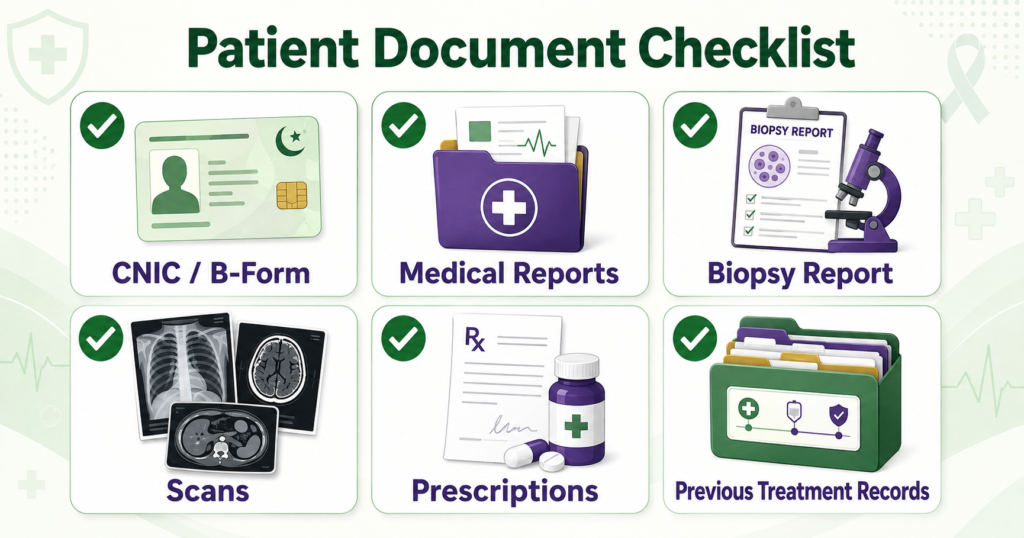
Because requirements can vary by case and hospital, the following is a practical preparation list rather than a guaranteed official checklist:
- Original CNIC of the adult patient
- B-Form or identity document for a child
- CNIC of the parent or legal guardian
- Active mobile number
- Recent medical reports
- Biopsy or histopathology report, if available
- Imaging reports and scans
- Laboratory reports
- Previous prescriptions
- Hospital discharge summaries
- Cancer diagnosis certificate, if issued
- Oncologist’s treatment recommendation
- Details of previous chemotherapy, radiotherapy or surgery
- Any existing government health card or program document
- Proof of residence, if requested
Carry both original documents and photocopies. Medical files should be arranged by date so that hospital staff can quickly understand the patient’s diagnosis and treatment history.
How to Apply for the Chief Minister Cancer Initiative
The Punjab government’s main public page confirms the benefits and implementing organization but does not clearly advertise a single public online application form or a dedicated SMS registration code.
Patients should therefore follow the verified hospital-based route instead of submitting personal information to unofficial websites.
Step 1: Contact PHIMC
Call the official PHIMC helpline at 0800-07542 and ask about the Chief Minister’s Special Initiative for Cancer Patients.
Request the following information:
- Current eligibility conditions
- Nearest empaneled cancer hospital
- Required documents
- Registration procedure
- Whether a referral is required
- Whether the patient needs an appointment
- Whether the required treatment is available at that hospital
PHIMC also lists the following contact numbers on its official website:
- 0333-6756390
- 042-99066000
- 042-99066001
Telephone availability may differ by number. The toll-free helpline is listed as a 24-hour service, while other numbers may operate during office hours.
Step 2: Locate an Empaneled Hospital
Treatment is available only through participating or empaneled healthcare facilities. A hospital offering cancer treatment does not automatically become part of this initiative.
Patients should verify the hospital through the official PHIMC hospital list or helpline before travelling.
Ask specifically:
“Is this hospital currently empaneled under the Chief Minister’s Special Initiative for Cancer Patients, and does it provide the treatment required for this diagnosis?”
This is important because some hospitals may offer only selected services.
Step 3: Visit the Official Facilitation Desk
At the hospital, locate the official program counter, health card desk or patient facilitation desk. Show the patient’s identification and medical records.
Hospital staff may review:
- The patient’s identity
- Cancer diagnosis
- Existing medical reports
- Recommended treatment
- Eligibility information
- Availability of the required treatment package
Step 4: Complete Medical Assessment
A specialist may need to confirm the diagnosis and prepare an appropriate treatment plan. Further tests may be required if existing reports are incomplete or outdated.
The treatment plan may identify the need for chemotherapy, surgery, radiotherapy, medicines or a combination of services.
Step 5: Wait for Verification and Authorization
The hospital and program administration may verify the patient’s information and treatment request. Approval time can vary according to the case, documentation and required service.
Patients should obtain a registration number, receipt, token or written acknowledgement wherever possible.
Step 6: Receive Approved Treatment
After approval, treatment can proceed according to the authorized plan and available annual limit.
Before each major procedure, confirm:
- That authorization has been granted
- Whether the full procedure is covered
- Which medicines are included
- Whether any payment is required
- Whether follow-up services are covered
- What documents should be brought to the next visit
Is There an Online Registration Portal?
As of the latest information reviewed for this article, the main official Punjab government page does not clearly provide a public online registration portal specifically for cancer patients.
Several unofficial websites claim that applicants can register online, check eligibility through an SMS code or submit their CNIC through a private portal. Patients should treat such claims cautiously.
Do not enter your CNIC, medical records or mobile number on a website merely because it uses the words “CM Punjab,” “government scheme” or “eligibility checker.”
Only trust:
- Websites ending in punjab.gov.pk
- The official PHIMC website
- A registration link provided directly by PHIMC
- An official desk at an empaneled hospital
If an online application system is introduced later, PHIMC should be able to confirm its correct address.
Participating Hospitals
The initiative operates through empaneled public and private healthcare facilities. The list may be updated as hospitals join, leave or change the services they provide.
Patients should use the official PHIMC hospital directory or contact its helpline for the latest information. Do not rely on an old social-media post or third-party hospital list before travelling, especially if the journey is long.
When calling a hospital, ask:
- Is the cancer initiative currently active here?
- Which types of cancer are treated?
- Are chemotherapy and radiotherapy both available?
- Is cancer surgery available?
- Is an appointment required?
- Which documents should we bring?
- Does the hospital accept new patients under the initiative?
- Is referral from another hospital necessary?
A hospital may be empaneled but may not provide every cancer service. A patient who needs radiotherapy, for example, may have to visit a specialized centre.
Are All Treatment Expenses Completely Free?
The government describes the initiative as providing comprehensive, free-of-cost cancer care for eligible patients through approved facilities. However, free treatment applies to approved services within the program’s rules and annual limit.
Patients should verify whether the following are included:
- The exact diagnostic test
- The prescribed medicine or brand
- Hospital admission
- Blood products
- Surgical implants or consumables
- Supportive medicines
- Private room charges
- Transportation
- Food and accommodation for attendants
- Treatment received outside the empaneled network
Expenses outside the approved package or beyond the annual limit may not be covered. Never agree to a major payment without requesting a written explanation of why the service is not covered.
More Than 113,000 Procedures Completed
Recent official promotional material states that more than 113,000 procedures have been completed under the Chief Minister’s Special Initiative for Cancer Patients.
This figure refers to procedures, not necessarily 113,000 individual patients. One cancer patient may require multiple chemotherapy sessions, tests, radiotherapy sessions or other procedures during treatment.
The number nevertheless indicates that the initiative has moved beyond an announcement and is being used for cancer-related healthcare services. Readers should check official Punjab or PHIMC updates for the reporting date and any newer figures.
Why This Cancer Program Is Important
Cancer treatment often continues for months or years. Families may face costs related to investigations, repeated hospital visits, medicines, surgery and specialized treatment.
Delays caused by financial difficulties can affect continuity of care. By covering approved services at public and private hospitals, the initiative aims to help eligible patients begin or continue treatment without catastrophic out-of-pocket expenditure.
The program may be particularly valuable for families who cannot independently afford chemotherapy, radiotherapy or major cancer surgery.
Its wider value includes:
- Improving access to specialized cancer care
- Reducing the financial burden on families
- Connecting patients with empaneled hospitals
- Supporting continuity of treatment
- Increasing access to cancer medicines
- Allowing patients to receive care in approved private facilities where available
- Strengthening Punjab’s targeted healthcare support system
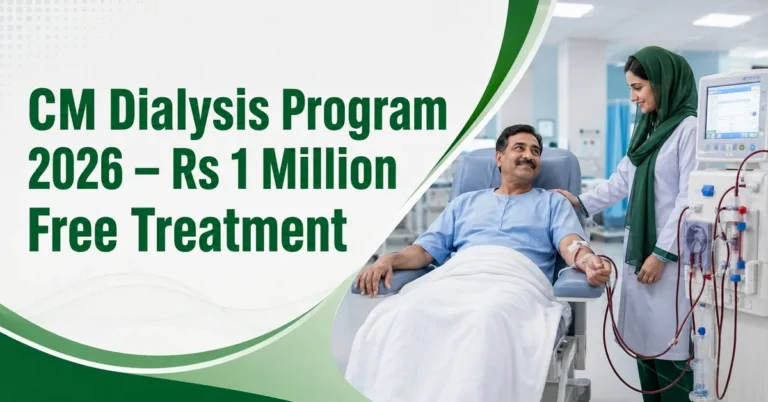
Punjab has also introduced targeted assistance for people suffering from other serious illnesses. For example, the CM Punjab Dialysis Program supports eligible kidney patients who require regular dialysis treatment. Together, these programs aim to reduce the financial burden of costly and continuing medical care.
Important Safety and Fraud Warnings
Cancer patients and their families can be vulnerable to misinformation. Keep the following precautions in mind:
- Do not pay anyone who promises guaranteed approval.
- Do not share CNIC photographs through an unknown WhatsApp number.
- Do not pay a registration fee on an unofficial website.
- Do not trust a social-media post without verifying it through PHIMC.
- Do not purchase expensive medicines expecting reimbursement unless it is officially authorized.
- Do not hand over original medical records without receiving them back.
- Do not stop or delay prescribed cancer treatment while waiting for online rumors to be confirmed.
- Report unauthorized demands for payment to hospital management and PHIMC.
No website, agent or private individual should guarantee medical approval without formal verification.
What to Do If Treatment Is Refused or Delayed
If a patient believes an eligible service has been refused, ask the hospital for the exact reason. Common issues may include incomplete documentation, lack of authorization, exhausted coverage, treatment not being available at that facility or the requested service falling outside the approved package.
Take these steps:
- Speak to the hospital’s official program representative.
- Request the reason for refusal or delay in writing.
- Note the patient’s registration or card number.
- Keep copies of prescriptions and treatment recommendations.
- Contact the PHIMC helpline.
- Provide the hospital name, date and details of the problem.
- Ask whether the patient can be referred to another empaneled facility.
In a medical emergency, seek immediate clinical care instead of waiting for an administrative complaint to be resolved.
Frequently Asked Questions
Official Contact Information
For current registration guidance, eligibility confirmation, complaints and participating hospital information, contact the Punjab Health Initiative Management Company:
- Toll-free helpline: 0800-07542
- Additional contact: 0333-6756390
- Telephone: 042-99066000
- Telephone: 042-99066001
- Official PHIMC website: https://phimc.punjab.gov.pk/
- Official Punjab program page: https://punjab.gov.pk/special-initiative-cancer
Helpline schedules can change. If one number does not respond, try the toll-free number or consult the official website.
Final Words
The Chief Minister Cancer Initiative 2026 offers important financial protection to eligible cancer patients in Punjab. Through the Special Initiative Card, approved patients may receive diagnosis, chemotherapy, radiotherapy, cancer surgery and essential medicines worth up to Rs. 10 lakh annually.
Patients should begin by contacting PHIMC and locating an empaneled hospital. They should carry complete medical records, obtain authorization before expensive treatment and confirm exactly which services are covered.
Most importantly, patients should use official government channels and avoid unofficial websites or agents claiming guaranteed registration. Correct information can protect both the patient’s health and the family’s finances.
Medical disclaimer: This article explains a government healthcare program and does not provide medical advice. Cancer diagnosis and treatment decisions must be made by qualified healthcare professionals. Program benefits, eligibility, hospitals and procedures can change, so always verify current information through official channels.