Ehsaas Scholarship for Students 2026: Eligibility and Application Guide
Higher education can become difficult for talented students when tuition fees, books, transport and daily living expenses exceed their family’s budget. The Ehsaas Scholarship for Students was introduced to help financially deserving students continue undergraduate education without leaving university because of financial hardship.
The programme is administered through the Higher Education Commission and participating public-sector universities. On HEC’s current website, it is presented as the BISP Scholarship for Undergraduates. However, its main purpose remains closely associated with the former Ehsaas Undergraduate Scholarship: supporting academically capable students whose families cannot comfortably afford higher education.
The scholarship is intended primarily for students studying in eligible undergraduate programmes at HEC-recognised public-sector universities. Selection is not based on marks alone. The university also assesses household income, expenses, assets, dependants and the applicant’s overall financial circumstances.
This guide explains the expected eligibility requirements, scholarship benefits, required documents, online application procedure and selection process for 2026.
Ehsaas Scholarship 2026 Overview
| Programme Detail | Information |
|---|---|
| Current official name | BISP Scholarships for Undergraduates |
| Previous popular name | Ehsaas Undergraduate Scholarship |
| Administered through | HEC and participating universities |
| Education level | Undergraduate programmes |
| Institution type | Eligible public-sector universities |
| Main selection basis | Academic merit and financial need |
| Application method | Online form followed by university submission |
| Final assessment | University Financial Aid Office and scholarship committee |
| 2026 deadline | Not officially confirmed at the time of writing |
| Official source | HEC scholarship website |
The programme is a need-based scholarship in Pakistan, not simply a high-achiever award. A student must first meet the university’s academic admission requirements and then demonstrate genuine financial need.
What Does the Scholarship Cover?
According to HEC’s programme objectives, the scholarship provides tuition support and a stipend throughout an eligible four- or five-year degree. Continued assistance remains subject to programme rules and satisfactory academic progress. HEC describes the official coverage here.
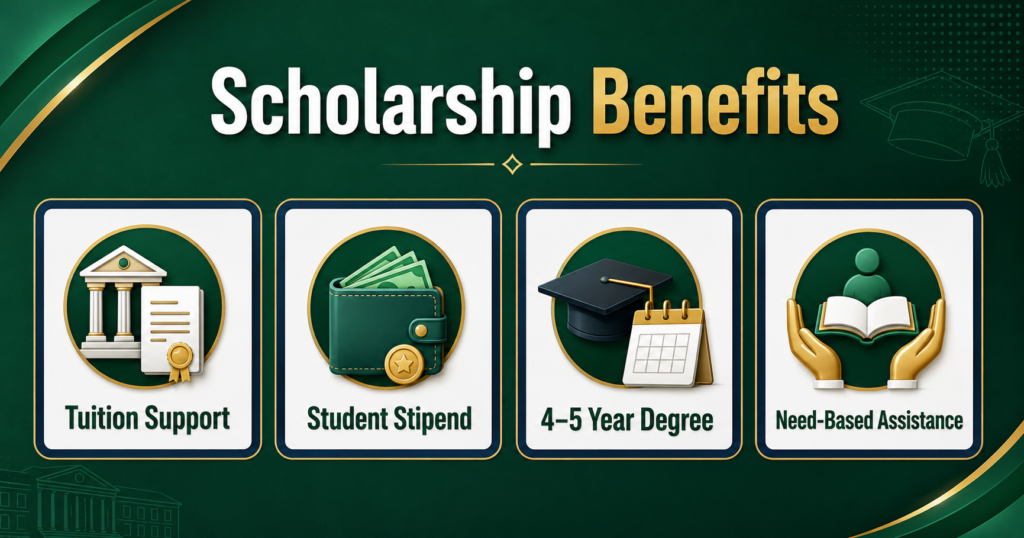
The principal benefits may include:
- Payment of the eligible university tuition fee
- A stipend to help with educational and living expenses
- Support covering the normal duration of an approved undergraduate degree
- An opportunity for students from financially disadvantaged families to complete higher education
Applicants should not assume that every expense is automatically covered. Hostel fees, transportation, security deposits or other institutional charges may be treated separately. The Financial Aid Office should confirm exactly which charges are covered for the relevant academic session.
Similarly, old articles frequently mention a fixed annual stipend of Rs40,000. Students should verify the current amount from their university because stipend rates and disbursement arrangements can change.
Eligibility Criteria for Ehsaas Scholarship
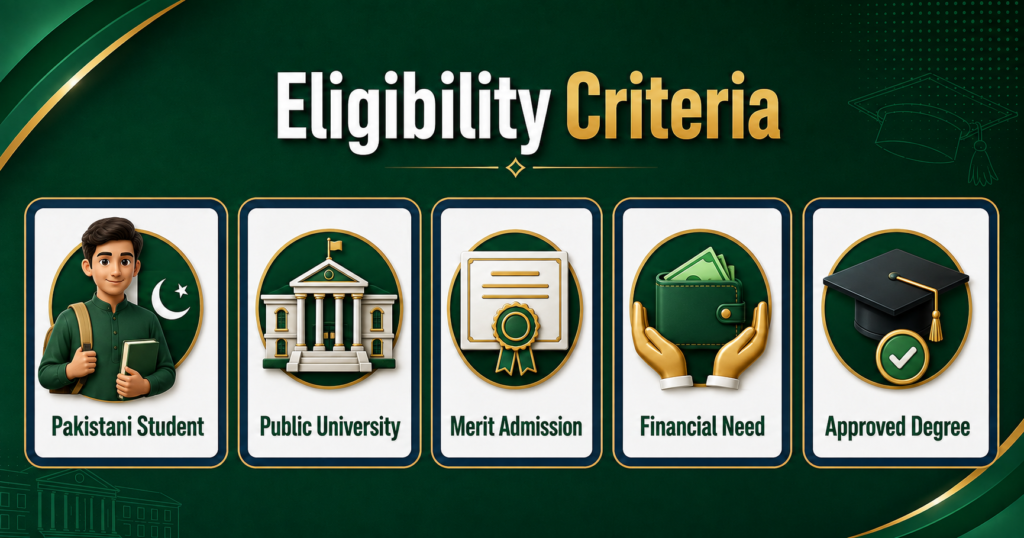
Applicants generally need to satisfy the following conditions:
Admission in an eligible university
The applicant should be enrolled as an undergraduate student in an eligible HEC-recognised public-sector university. Students should confirm participation directly with their university’s Financial Aid Office.
Admission secured on merit
The student must have obtained admission by fulfilling the institution’s standard academic criteria. Admission under an expensive self-finance, self-support or similar paid category may make the applicant ineligible.
Approved undergraduate programme
The degree must be permitted under HEC and programme rules. Eligible courses may include four- or five-year undergraduate programmes, depending on the university and discipline.
Demonstrated financial need
The applicant must provide authentic details about family income, expenses, property, employment, household members and other financial circumstances. The Institutional Scholarship Award Committee evaluates these details before making a decision.
Some unofficial articles quote a universal monthly household-income limit of Rs45,000. The current HEC eligibility page does not present that figure as a universal rule. Financial need is assessed under the project’s policy, so students should provide complete evidence instead of rejecting themselves solely because of an old online income figure.
Required age limit
The applicant must meet the age requirements prescribed by the university for admission to the relevant undergraduate programme.
No duplicate scholarship
A student already receiving another scholarship or continuous educational grant may be ineligible. Any existing financial assistance should be declared honestly.
The official HEC eligibility criteria should always be checked before applying.
Who Is Not Eligible?
An applicant may be declared ineligible if he or she is:
- Already receiving another scholarship or continuous grant
- Enrolled in a distance-learning programme
- Studying at an affiliated college not covered by the programme
- Admitted under self-finance, self-support or self-sustain arrangements
- Enrolled in an evening programme carrying a higher fee structure
- Studying in a two-year post-higher-secondary programme
- Enrolled in a two-year associate degree, BA, BSc or master’s programme
- Entering an undergraduate degree directly in the fifth semester after completing an associate degree
Eligibility can differ according to the applicant’s institution and admission category. Therefore, written confirmation from the university is more reliable than information posted by an unofficial scholarship page.
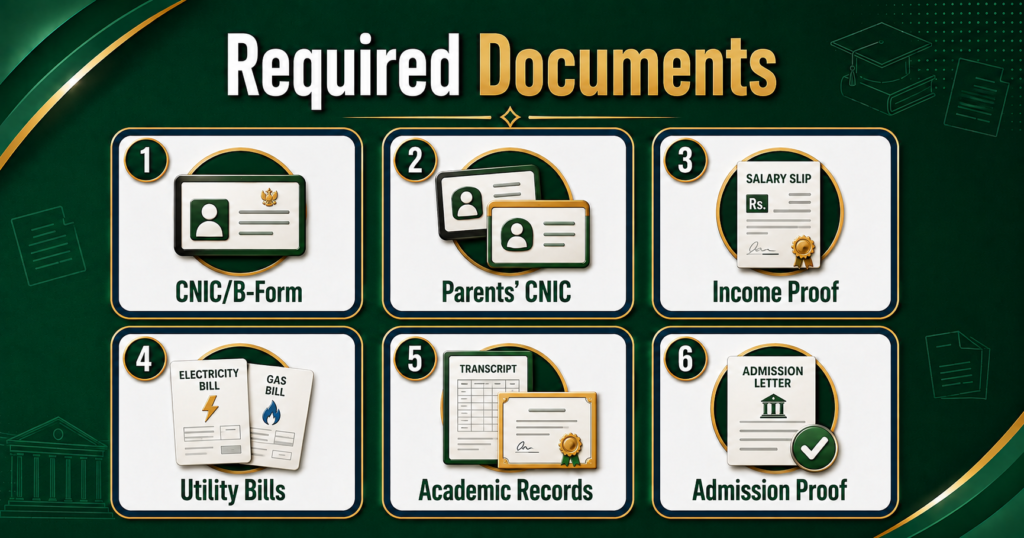
Documents Required for the Application
Students should prepare clear and valid copies of the following documents:
- Applicant’s CNIC or B-Form
- CNIC copies of the father, mother or legal guardian
- Salary slips or income certificates of earning household members
- Pension book or retirement documents, where applicable
- Recent electricity, gas, telephone and water bills
- Rent agreement if the family lives in rented accommodation
- Copies of previous academic certificates and result cards
- University admission letter or proof of enrolment
- Fee challan or official fee statement
- Evidence of agricultural land, business income or other assets, if applicable
- Death certificate if a parent is deceased
- Medical or disability documents where relevant
- Recent passport-size photographs
HEC’s supporting-documents page confirms that applicant and parental identification documents, along with income evidence, form an important part of the application.
The university may request additional evidence after reviewing the form. Applicants should keep original documents available for verification and retain copies of everything submitted.
How to Apply for Ehsaas Scholarship Online
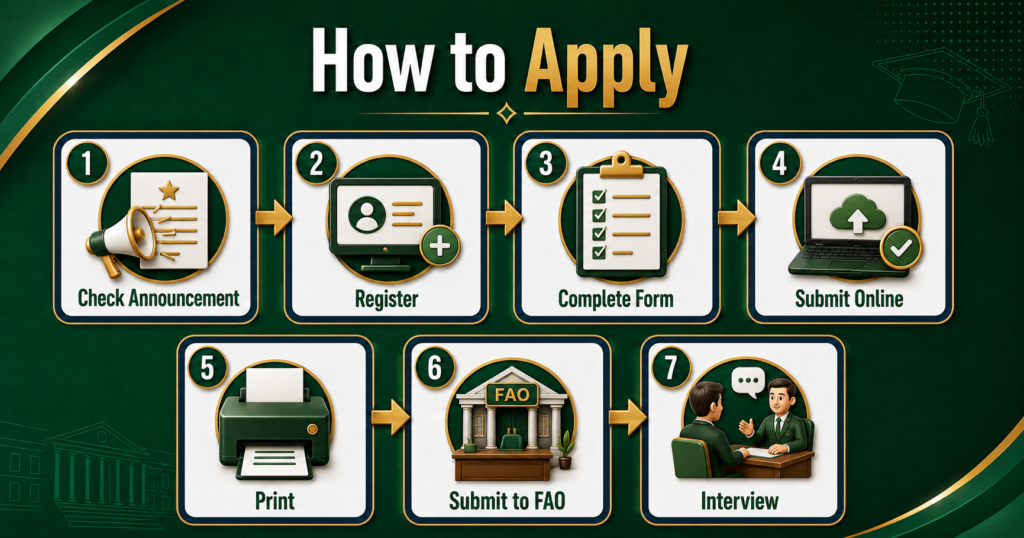
The expected Ehsaas scholarship online apply procedure involves both an online application and submission through the university.
Step 1: Check the application announcement
Visit the official HEC scholarship pages and contact your university’s Financial Aid Office. Confirm whether applications are open, which batches are eligible and what deadline applies to your institution.
Step 2: Create an online account
Open the portal specified in the official announcement. Register using your correct CNIC, mobile number, email address and personal information.
Step 3: Complete the application form
Provide accurate information about:
- Personal and academic details
- University and degree programme
- Parents or guardians
- Monthly household income
- Household expenses and dependants
- Property, vehicles, businesses and agricultural assets
- Existing scholarships or financial assistance
All amounts and spellings should match the supporting documents.
Step 4: Submit the online form
Saving a draft does not mean the application has been submitted. Review every section, use the final submission option and save the confirmation or application number.
Step 5: Print the completed application
Download and print the submitted form. Sign it wherever required and arrange supporting documents in the order requested by the university.
Step 6: Submit documents to the university
Deliver the printed form and attachments to the Financial Aid Office before its deadline. Do not send the application directly to HEC unless an official notice specifically instructs you to do so.
Step 7: Attend the interview
Shortlisted candidates may be called before the Institutional Scholarship Award Committee. Students should be prepared to explain their family circumstances, education expenses and reasons for seeking assistance.
HEC’s scholarship award process confirms the importance of submitting the online form and providing the application and documents to the university.
How Are Students Selected?
The university first checks whether the application is complete and whether the student meets the basic requirements. Eligible applications are then assessed for financial need.
The committee may consider:
- Total family income
- Number of earning and dependent family members
- Educational expenses of siblings
- Rent and utility expenses
- Medical costs within the household
- Ownership of land, property, businesses and vehicles
- Applicant’s academic position and admission status
- Authenticity of submitted documents
Shortlisting does not guarantee an award. Final selection depends on verification, available funds, programme rules and the committee’s assessment.
Providing false information can lead to rejection, cancellation of an already-awarded scholarship and recovery of funds.
How to Check Application Status for Ehsaas Scholarship for Students
Applicants can monitor their application through the relevant HEC scholarship portal, but the university’s Financial Aid Office remains an important contact point.
Students should:
- Save their application number.
- Check the portal and registered email regularly.
- Keep their mobile number active.
- Follow university notices and official social-media pages.
- Ask the Financial Aid Office about scrutiny, interview and award-list dates.
Avoid paying agents who promise guaranteed selection. No private person can lawfully guarantee scholarship approval.
Useful Opportunities for Pakistani Students
Students exploring undergraduate scholarships in Pakistan may also benefit from other education and career resources.
School students and parents can read the Nawaz Sharif Schools of Eminence 2026 guide to understand a major public education initiative in Punjab.
University students seeking practical experience after completing their studies can explore the KPITB Internship Program 2026. Those planning to secure skilled employment abroad can also review the Parwaaz Card application guide.
Families facing urgent financial difficulty may find the Ehsaas Emergency Cash Program guide helpful. Students who depend on affordable public transport in Punjab can also learn about routes and facilities through the Punjab E-Bus Service guide.
Tips for a Successful Scholarship Application
Complete the application early so there is enough time to correct missing information. Ensure that names, CNIC numbers, income amounts and university details are consistent across the form and documents.
Do not conceal income, property or an existing scholarship. A modest but honestly documented financial profile is safer than contradictory information.
Students should also prepare for the interview. Explain financial circumstances clearly and respectfully, but do not memorise exaggerated statements. Keep copies of the submitted form, supporting documents and acknowledgement receipt.
Frequently Asked Questions
Final Words
The Ehsaas Scholarship for Students can provide valuable support to academically deserving university students facing genuine financial difficulty. Its combination of tuition assistance and a student stipend can reduce the risk of leaving education because of unaffordable costs.
Applicants should remember that the programme is currently presented by HEC as the BISP Scholarship for Undergraduates. Before submitting any information, verify the current application announcement, deadline and benefit package through HEC and the university’s Financial Aid Office. A complete, honest and properly documented application offers the strongest chance of consideration.