Livestock Asset Transfer to Rural Women Scheme 2026: Apply for Free Animals
The Livestock Asset Transfer to Rural Women Scheme is a Punjab government initiative designed to provide sustainable income opportunities to disadvantaged women living in rural areas. Under the programme, eligible widowed and divorced women can receive livestock assets, including cow and buffalo heifers, without paying for the animals.
Instead of offering only short-term financial assistance, the programme gives beneficiaries a productive asset that can generate income for several years. A woman may earn through milk production, calf rearing and other livestock-related activities while also improving the nutritional and financial security of her household.
Registration for the latest phase opened on 15 July 2026. Applications can be submitted through the official online portal or with help from facilitation desks established at veterinary hospitals and animal health centres. The first phase covers 13 districts of Punjab.
Women should apply only through the official portal at attrw.punjab.gov.pk or visit a government livestock facility. Registration does not automatically guarantee an animal. Every application must undergo scrutiny, eligibility verification and, where necessary, physical verification before livestock is transferred to a successful applicant.
What Is the Livestock Asset Transfer to Rural Women Scheme?
The programme, officially titled Livestock Asset Transfer to Rural Women in South Punjab, is a Punjab government initiative launched under Chief Minister Maryam Nawaz to provide free livestock to deserving rural women.
The initiative is being implemented through the Livestock and Dairy Development Department, Punjab. The Punjab Information Technology Board developed the digital system and Livestock Asset Transfer to Women App used to register applicants and process their information.
The programme primarily supports poor rural women who have livestock-rearing experience but lack the financial resources to purchase productive animals. Following registration and verification, selected women receive heifers that can support milk production, breeding and household income.
The government’s programme overview reports the distribution of 4,870 animals, including:
- 3,042 cow heifers
- 1,828 buffalo heifers
Free livestock distribution has started under the first phase. However, applicants should remember that the availability and type of animal may depend on programme arrangements, verification results and the number of eligible applications received in their district.
Main Objectives of the Programme
The Rural Women Livestock Scheme aims to reduce poverty by turning livestock ownership into a reliable source of livelihood. Its main objectives include:
- Providing a productive asset to deserving rural women
- Supporting widows and divorced women who have limited income
- Increasing women’s participation in the rural economy
- Encouraging sustainable livestock farming
- Improving household food and nutritional security
- Creating opportunities to earn through milk and animal rearing
- Reducing long-term dependence on temporary financial assistance
An animal can offer more than immediate monetary relief. With proper feeding, vaccination and care, livestock may provide milk for home consumption or sale and produce calves that increase the beneficiary’s assets over time.
Women searching for additional welfare opportunities can also read the CM Punjab Rahmat Card registration guide to understand how eligible vulnerable families may access financial support through another Punjab government initiative.
Eligibility Criteria
Applicants must satisfy all conditions announced for the Livestock Asset Transfer Eligibility process. A woman may be considered if she:
- Is a widow or divorced woman
- Is not more than 55 years old
- Lives in one of the programme’s covered districts
- Belongs to a rural and financially disadvantaged household
- Has a valid Computerised National Identity Card
- Has a mobile SIM registered in her own name
- Has not received an animal through another government livestock scheme during the previous five years
- Can complete marital-status and physical verification
- Meets any additional conditions imposed by the relevant department
The applicant’s marital status must be verified through the Punjab Social Protection Authority or the relevant government record. Providing inaccurate marital, identity or residential information may result in rejection.
The scheme is intended for women who can keep and care for livestock. During physical verification, officials may assess the applicant’s residence, economic circumstances and ability to manage an animal.
Which Women Cannot Apply?
An applicant may be declared ineligible if she:
- Is older than the permitted age
- Does not reside in a covered district
- Has an expired or invalid CNIC
- Uses a mobile number registered in another person’s name
- Received livestock from a government programme during the last five years
- Cannot verify her widow or divorced status
- Provides false or incomplete information
- Fails physical verification
- Does not meet the programme’s poverty or rural-residence requirements
Applicants should enter information exactly as it appears on their CNIC and official records. Even minor differences in names, CNIC numbers or mobile ownership can delay verification.
Districts Included in Phase I
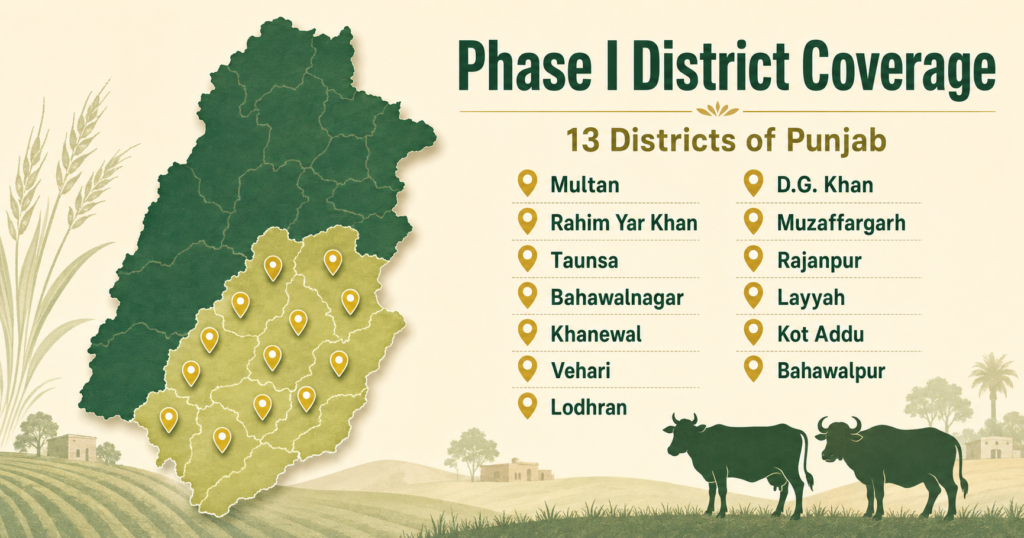
The current Punjab Livestock Distribution Program covers the following 13 districts:
- Multan
- Rahim Yar Khan
- Taunsa
- Bahawalnagar
- Khanewal
- Vehari
- Lodhran
- Dera Ghazi Khan
- Muzaffargarh
- Rajanpur
- Layyah
- Kot Addu
- Bahawalpur
Women living outside these districts may not qualify under Phase I. They should wait for an official expansion announcement instead of submitting information through unofficial agents.
The programme complements other rural-support initiatives. For example, families interested in community food assistance can learn about the Punjab Sanjhi Sabzi Scheme and free vegetable distribution in the province.
Documents Required for Registration
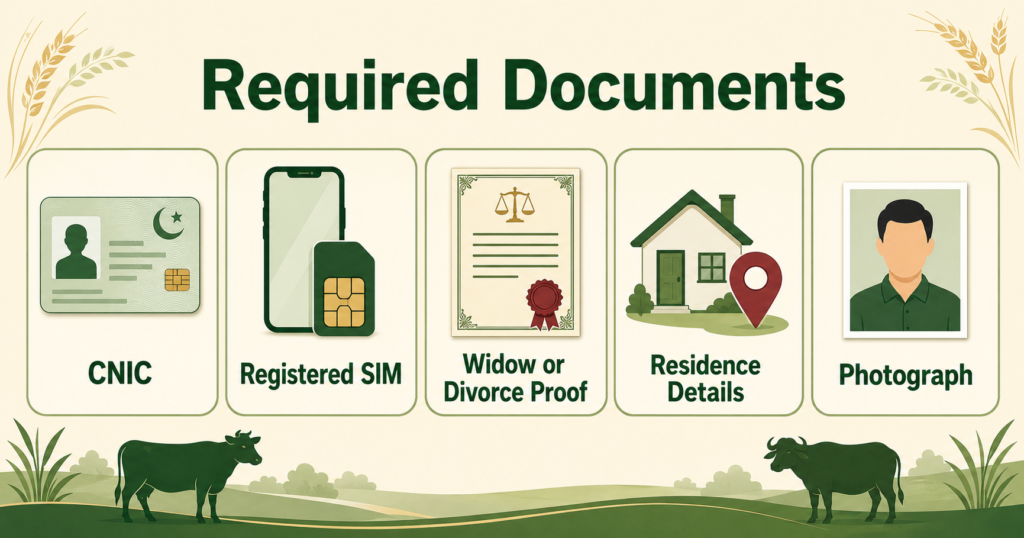
Applicants should prepare the following information and documents before starting Livestock Asset Transfer Registration:
- Original valid CNIC
- Mobile number registered against the applicant’s CNIC
- Proof of residence, if requested
- Widowhood verification or husband’s death certificate
- Divorce certificate or official proof of divorced status
- Recent passport-size photograph
- Residential address and district details
- Information about previously received government livestock
- Any affidavit or declaration required by the department
The portal may not require every document during the initial registration stage. Nevertheless, applicants should keep the documents ready for scrutiny and physical verification.
How to Apply Online
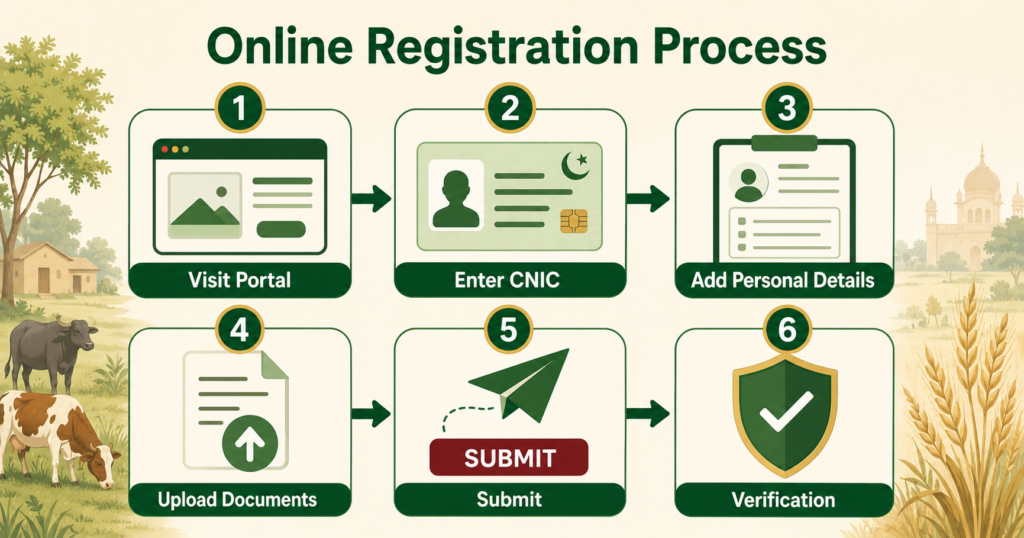
Women who can use a smartphone or computer may complete the Livestock Asset Transfer Online Apply process through the government portal.
Step 1: Visit the official portal
Open attrw.punjab.gov.pk. Check the web address carefully before entering personal information.
Step 2: Start registration
Select the registration or application option shown on the portal. Read the instructions and eligibility conditions before proceeding.
Step 3: Enter personal information
Provide the applicant’s name, CNIC number, date of birth, marital status, district, address and other required details. All information must match official documents.
Step 4: Provide a registered mobile number
Enter a mobile number registered in the applicant’s own name. The number may be used for identity confirmation, application updates or verification contact.
Step 5: Upload or provide the required records
Attach the documents requested by the system. Make sure uploaded photographs are clear and readable.
Step 6: Review the application
Check the CNIC, mobile number, district, marital status and address before submission. Incorrect information may delay or prevent approval.
Step 7: Submit and save the record
Submit the application and save its reference number, tracking number or confirmation screenshot. This record may be needed when contacting the department.
How to Apply Without Using the Online Portal
Women who do not have internet access or cannot complete online registration should visit a nearby:
- Government veterinary hospital
- Animal health centre
- Livestock department office
- Chief Minister facilitation desk established for the programme
Officials at these locations can guide applicants through registration. The woman should carry her original CNIC, registered mobile SIM and marital-status documents.
No applicant should pay an agent to submit the form. The programme provides livestock free of cost, and official registration assistance should not require a private agent.
What Happens After Application Submission?
Submitting a form is only the first stage of the Free Cow and Buffalo Scheme. Applications pass through several checks before final selection.
The expected process is:
- Application submission
- Initial data scrutiny
- CNIC and mobile-number verification
- Marital-status verification
- Government-benefit history check
- Physical or household verification
- Final selection of eligible applicants
- Transfer of livestock to successful women
Officials may contact the applicant or visit her residence. Therefore, she should keep her registered mobile number active and provide a complete, accurate address.
Selection depends on successful verification and programme capacity. If applications exceed the number of available animals, the department may use its approved selection or balloting procedure. Applicants should rely on official notifications regarding final selection.
Benefits of Receiving Livestock
The Livestock Support Scheme for Women can help beneficiaries build a long-term source of income. Potential benefits include:
- Milk for household use
- Income from selling surplus milk
- Expansion of livestock through breeding
- Reduced household food expenses
- Greater financial independence
- An asset that may increase in value
- Increased participation of women in local economic activity
These benefits depend on proper animal management. Beneficiaries should follow veterinary guidance about feeding, clean water, shelter, vaccination and disease prevention.
Rural mothers and families needing nutrition-related support may also check the Ehsaas Nashonuma Program registration and payment guide for information about assistance available to pregnant women, breastfeeding mothers and young children.
Important Precautions Against Fraud
Applicants should follow these safety measures:
- Apply only through
attrw.punjab.gov.pkor an official government facility. - Do not pay anyone for guaranteed selection.
- Never share a bank PIN, ATM PIN or mobile-wallet password.
- Do not disclose an OTP received on the registered number.
- Do not submit an original CNIC to an unofficial agent.
- Ignore social-media accounts claiming they can approve applications.
- Verify every new deadline or announcement through official Punjab government channels.
The government does not guarantee livestock merely because someone has completed registration. Approval follows scrutiny and verification.
Other Punjab Support Programmes
Women who need housing assistance can read the Apni Chhat Mehfooz Chhat Scheme application guide for information about Punjab’s housing and roof-improvement support.
Households seeking medical assistance for eligible children can consult the Children Heart Surgery Program free treatment guide. These programmes have different eligibility requirements, so applicants must register separately through their respective official systems.
Frequently Asked Questions
Final Words
The Livestock Asset Transfer to Rural Women Scheme offers deserving widowed and divorced women an opportunity to establish a sustainable livelihood through livestock ownership. Eligible applicants from the 13 covered districts should prepare their CNIC, registered mobile number and marital-status records before applying.
Women who cannot use the online system can obtain assistance from government veterinary hospitals, animal health centres or programme facilitation desks. Applicants should provide accurate information, cooperate with verification teams and avoid anyone demanding payment for guaranteed approval.
By transferring productive animals instead of providing only temporary relief, the CM Punjab Livestock Scheme can help rural women earn income, improve household nutrition and build greater economic independence.