Ehsaas Panahgah: Free Shelter and Meals in Pakistan
Ehsaas Panahgah is a welfare initiative created to provide temporary shelter, free meals and essential facilities to homeless people, daily-wage labourers, unemployed individuals and travellers who cannot afford accommodation. The programme established model shelter homes in different parts of Pakistan, particularly in areas where labourers and low-income workers commonly live or search for employment.
The word “Panahgah” means a place of refuge or protection. Through this initiative, deserving people can receive a safe place to sleep instead of spending the night on a footpath, at a bus terminal, in a park or outside a hospital. Facilities were designed to maintain visitors’ dignity while providing accommodation, food, hygiene and security.
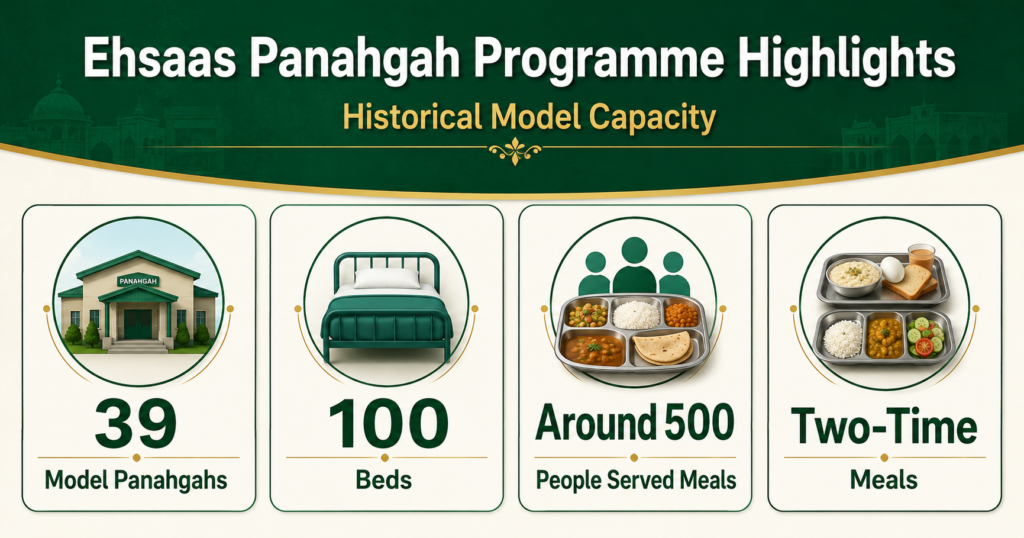
According to the official programme description, 39 model Panahgahs were established under the initiative. Each model facility was designed to accommodate approximately 100 people overnight and serve free meals to around 500 people. However, these are historical programme figures, and applicants should confirm the present operating status, capacity and timings of their nearest shelter before visiting.
What Is the Ehsaas Panahgah Programme?
The Ehsaas Panahgah Programme was introduced as part of the federal government’s wider social-protection framework. Its purpose was to assist people who required immediate accommodation and food but did not have enough money for a hotel, hostel or rented room.
Unlike cash-assistance schemes, Ehsaas Panahgah provides support in the form of services. Eligible visitors may receive temporary accommodation, meals, clean bedding and access to shared bathrooms. The shelter is primarily intended for a temporary or overnight stay rather than permanent residence.
The initiative placed special emphasis on the dignity and self-respect of beneficiaries. The facilities were developed in low-income neighbourhoods and areas populated by migrant workers so that assistance could reach people who needed it most.
The responsibility for managing Panahgah facilities was assigned to Pakistan Bait-ul-Mal, a federal organization that runs welfare projects for poor, vulnerable and disadvantaged citizens.
Ehsaas Panahgah Key Features
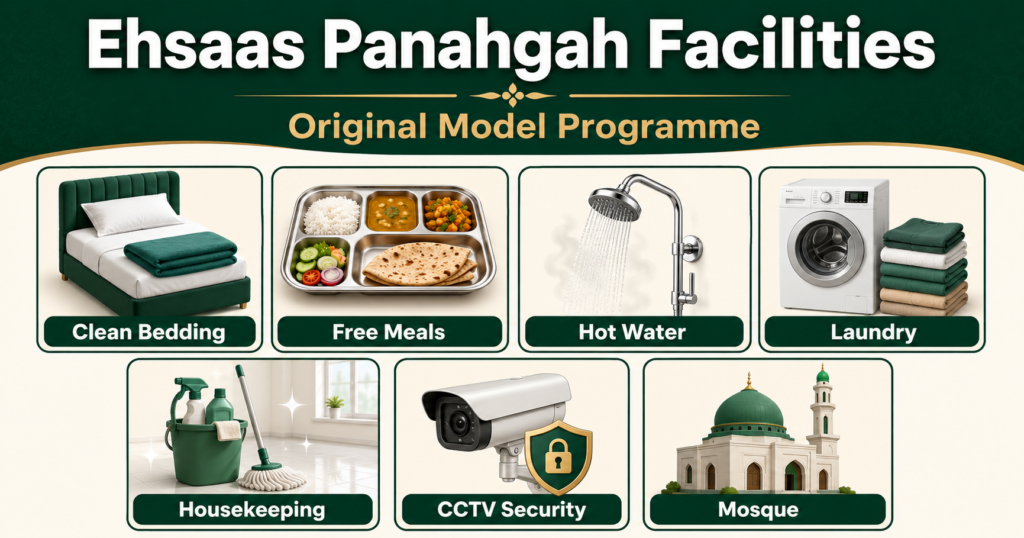
The model Ehsaas shelter homes were designed to offer more than a basic sleeping area. According to the official programme information, their main features included:
- Approximately 100 beds for overnight guests
- Free meals for around 500 people
- Clean sheets and bedding
- Shared bathrooms
- Hot running water where available
- Self-service meals in dining halls
- Power backup
- Laundry and housekeeping services
- Mosques or designated prayer spaces
- CCTV monitoring and security arrangements
- Separate reception and waiting areas at newer facilities
- Regular cleanliness and service monitoring
These figures describe the original model and may not represent the current services or capacity of every centre. Facilities can vary according to the building, city, available funding and local management.
Who Can Use Ehsaas Panahgah?
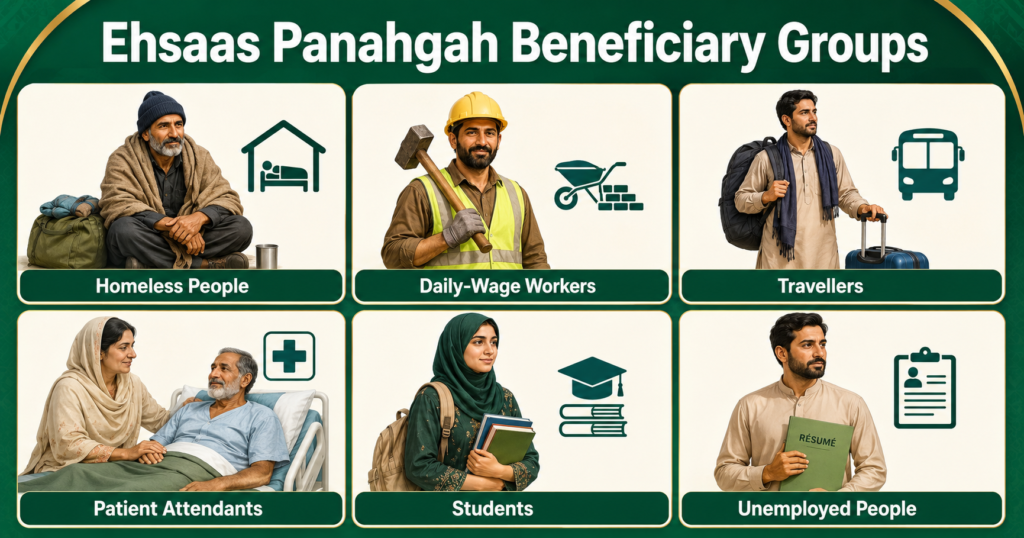
Ehsaas Panahgah was created for vulnerable people who need short-term accommodation or food. The programme has historically supported:
- Homeless individuals
- Daily-wage labourers
- Migrant workers
- Unemployed people
- Poor travellers and transit passengers
- People visiting another city for work
- Attendants accompanying hospital patients
- Students facing temporary financial difficulty
- People stranded away from home
- Elderly individuals without immediate support
- People affected by extreme weather or emergency conditions
A person does not necessarily have to be registered for a BISP cash programme to request temporary accommodation. Admission usually depends on genuine need, identity verification, compliance with shelter rules and the availability of a bed.
People looking for regular financial support rather than temporary shelter can read the Ehsaas Kafalat Program 2026: Check CNIC and Register Through 8171 guide. It explains how eligible low-income households can check their status through the official system.
Ehsaas Panahgah Eligibility Criteria
There is no complicated financial application form commonly associated with Panahgah registration. However, the management may verify each visitor before allowing entry.
A person may be considered if they:
- Require temporary or overnight accommodation
- Cannot afford private accommodation
- Are homeless or away from their permanent residence
- Are willing to provide identification information
- Agree to follow the shelter’s rules
- Do not bring weapons, drugs or prohibited items
- Cooperate during security screening
- Arrive while accommodation is available
Admission is not automatically guaranteed. Each Pakistan Bait-ul-Mal shelter home has limited capacity, and beds may be assigned on a first-come, first-served or need-based basis.
Documents Required for Ehsaas Panahgah
Visitors should carry their original CNIC whenever possible. Although requirements may differ between centres, the following information can help with verification:
- Original Computerized National Identity Card
- CNIC photocopy, if available
- Active mobile number
- Permanent or temporary address
- Name and number of an emergency contact
- Hospital slip for a patient or attendant
- Any alternative identification document
- Relevant travel or medical document, where applicable
If a person has lost their CNIC or is facing an emergency, they should still approach the management and explain their circumstances. The shelter staff will decide whether alternative verification can be accepted.
Never hand over an original CNIC to an unauthorized person or agent. Documents should only be shown to responsible staff at the facility.
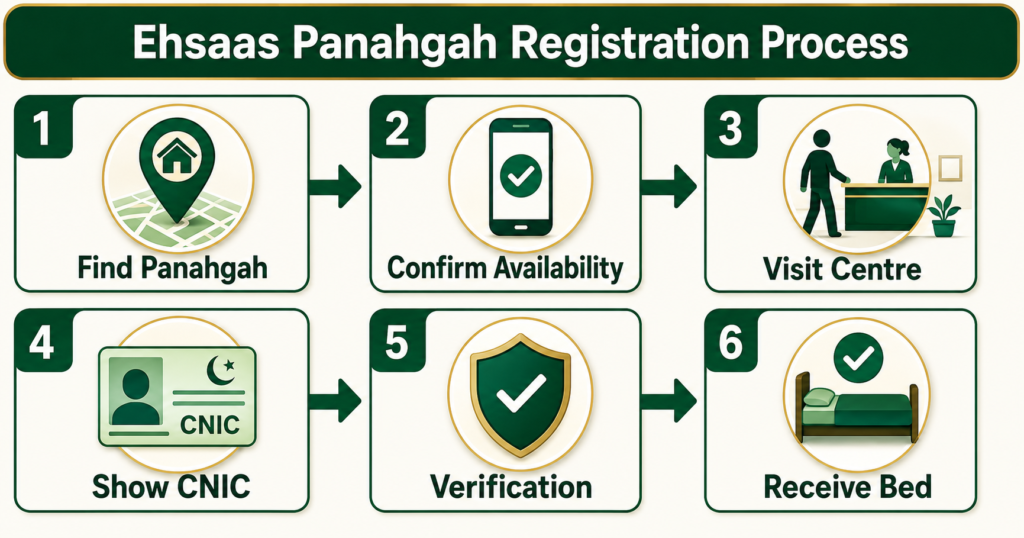
How to Apply for Ehsaas Panahgah
A countrywide online booking portal for public Ehsaas Panahgah registration has not been provided. Admission has generally been handled directly at the shelter.
Step 1: Find the nearest shelter
Contact Pakistan Bait-ul-Mal or the relevant district administration to find an operational Panahgah near me. Confirm the address before travelling because older online lists may no longer reflect the current situation.
Step 2: Confirm timings and availability
Ask about admission hours, current bed availability, meal timings and documentation. Reaching the shelter early may improve the chances of receiving accommodation.
Step 3: Visit the reception
Go to the shelter and explain why you require accommodation. Staff may ask about your residence, employment, destination or reason for visiting the city.
Step 4: Provide identification
Present your CNIC or another available identity document. Your information may be recorded in a manual register or management system.
Step 5: Complete security verification
Visitors may be screened before entry. These checks help maintain a safe environment for residents, staff and volunteers.
Step 6: Receive a bed or entry token
If the application is accepted and space is available, the visitor may receive a bed number, entry token or designated sleeping place.
Step 7: Follow Panahgah rules
Residents must observe meal schedules, sleeping hours, cleanliness standards and instructions given by the management.
Is 8171 Registration Required?
The BISP 8171 portal is used to check a household’s eligibility for certain social-protection payments. It should not be treated as an online reservation portal for Ehsaas Panahgah.
People should not pay an agent who claims that 8171 registration is required to reserve a Panahgah bed. Contact the relevant shelter or Pakistan Bait-ul-Mal for accurate admission information.
Families needing maternal and child nutrition assistance can separately consult the Ehsaas Nashonuma Program: Registration and Payments guide. Pregnant women seeking financial assistance may also find the Ehsaas Maa Program: Rs 20,000 Assistance for Mothers useful.
Meals and Accommodation Facilities
A major feature of Ehsaas Panahgah is the combination of accommodation and food. According to the original model, each centre could serve meals to around 500 people and provide overnight accommodation to approximately 100 visitors.
Meals were served in shifts through self-service dining areas. The programme information describes two-time meals, while some purpose-built centres also promoted a bed-and-breakfast arrangement. Actual meal schedules can vary, so visitors should confirm whether breakfast, dinner or both are currently available.
The shelters also provided clean sheets, shared bathrooms, hot water, housekeeping and laundry services. CCTV surveillance, security personnel and power backup were included in the model to create a safer and more reliable environment.
People struggling with household food expenses can also read Punjab Sanjhi Sabzi Scheme: Free Vegetables Explained, which covers a separate community-based food-support initiative.
Ehsaas Panahgah Locations
The programme established shelter homes in different regions of Pakistan. Official historical information mentions Islamabad locations such as:
- Bara Kahu
- Mandi Mor
- Peshawar Mor
- Tarlai
- Tarnol
- G-9
According to an Associated Press of Pakistan report, the initiative also operated facilities in Sindh and Balochistan. The report stated that four operational Panahgahs in Sindh had served 38,948 beneficiaries at that reporting stage, while three facilities in Balochistan had served 23,021 beneficiaries.
These statistics are historical and should not be presented as current 2026 totals. A person searching for an Ehsaas Panahgah location should contact the responsible authority before travelling.
Historical Performance of Ehsaas Panahgah
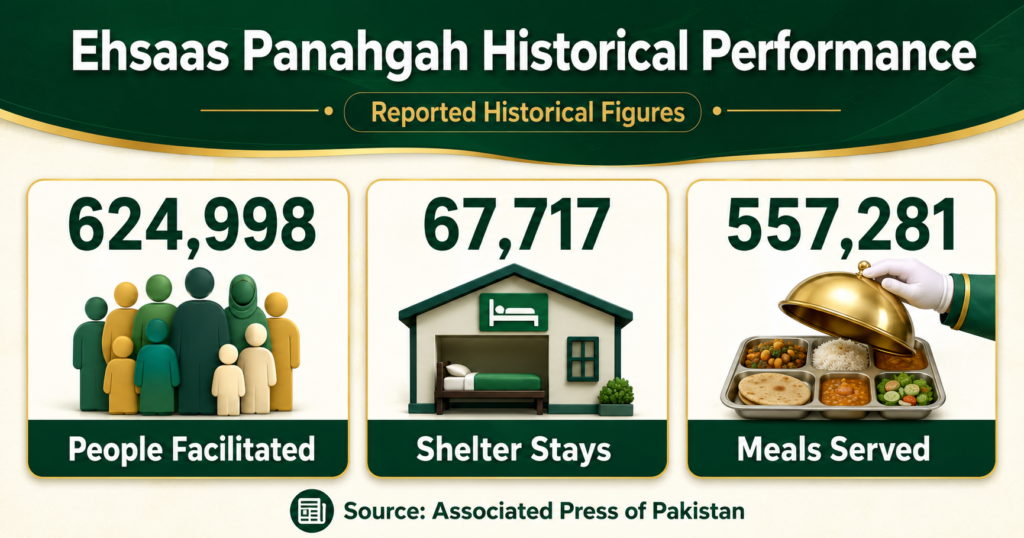
Associated Press of Pakistan reported that the Ehsaas Panahgah initiative had facilitated 624,998 people at the time of its March 4 report. This included:
- 67,717 people provided with shelter
- 557,281 meals served
- 562,963 beneficiaries supported through five Islamabad facilities
- 38,948 beneficiaries supported in Sindh
- 23,021 beneficiaries supported in Balochistan
The statistics show that meals were provided to significantly more people than overnight accommodation. This reflects the model’s ability to support people who needed food even when they did not require a bed.
Because these totals relate to an earlier reporting period, they should be labelled as historical achievements and not current annual figures.
Staff Training and Service Standards
Panahgah staff received specialized training in collaboration with Serena Hotels. The training covered:
- Hospitality and visitor management
- Food safety and hygiene
- Health, safety and environmental practices
- Housekeeping
- Cleanliness monitoring
- Respectful treatment of guests
This collaboration was intended to improve service quality and ensure that vulnerable visitors received assistance in a clean and dignified environment.
Newer purpose-built shelters were also planned with larger kitchens, cold-storage facilities, reception areas, lobbies and waiting spaces. Some were designed to include Ehsaas One Window Centres, allowing visitors to obtain information about other welfare programmes.
Difference Between Panahgah and Other Ehsaas Schemes
Ehsaas Panahgah provides temporary accommodation and food. It does not provide a housing loan, monthly stipend or business financing.
People requiring permanent housing assistance can read Apni Chhat Mehfooz Chhat Scheme 2026: Online Application Guide. Those needing medical assistance can explore the Sehat Sahulat Card 2026 – 8500 Eligibility Check and Hospital List or Punjab Health Connect Program 2026: Free Treatment Guide.
For livelihood financing, the 8171 Ehsaas Loan: Eligibility and Application Guide explains a different form of assistance. Each programme has separate eligibility conditions and application procedures.
Fraud Prevention and Safety Tips
Applicants should take the following precautions:
- Do not pay anyone to reserve a Panahgah bed.
- Do not share an OTP, ATM PIN or bank password.
- Avoid submitting CNIC images through unofficial websites.
- Verify the centre’s address before travelling.
- Do not trust social-media pages promising guaranteed admission.
- Keep original documents and personal belongings secure.
- Follow the shelter’s official security instructions.
- Report suspicious demands to the management or authorities.
Ehsaas Panahgah is a welfare service, not a paid hotel or cash-payment programme.
Frequently Asked Questions
Conclusion
Ehsaas Panahgah was established to provide homeless people, labourers, travellers, patient attendants and other vulnerable citizens with temporary accommodation and free meals. Its model emphasized dignity, security, cleanliness and respectful treatment.
The original programme reported 39 model shelters, with each designed to offer approximately 100 beds and meals for around 500 people. Historical APP figures also show that hundreds of thousands of people received shelter or food through the initiative.
However, applicants should not assume that every historical location remains operational or offers identical services today. Before travelling, confirm the latest address, admission timings, bed availability and document requirements with Pakistan Bait-ul-Mal or the relevant local administration.