
CM Dialysis Program 2026: Free Treatment and Card Guide
The CM Dialysis Program is a major healthcare initiative introduced by the Government of Punjab to provide free and uninterrupted dialysis treatment to kidney patients. Officially known as the Chief Minister’s Special Initiative for Dialysis Program (CMSIDP), it helps eligible Punjab residents receive dialysis sessions and related medical services without bearing the heavy cost themselves.
Dialysis is not a one-time treatment. Patients with advanced chronic kidney disease or kidney failure may need several sessions every week. The combined cost of dialysis, laboratory tests, medicines, vascular access procedures and travel can place enormous pressure on a family’s income. The Punjab government introduced this programme to reduce that burden and ensure that patients do not discontinue life-saving treatment because of financial problems.
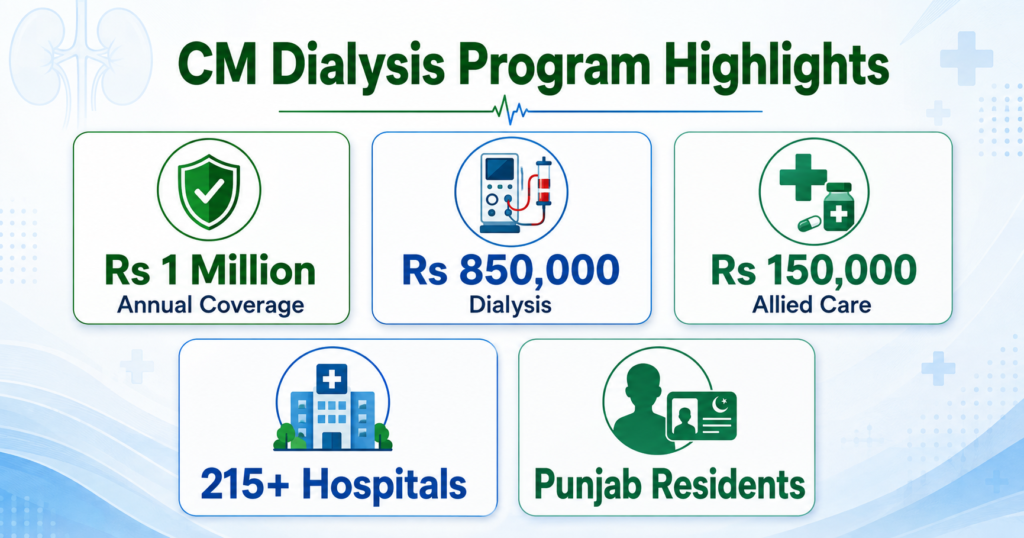
The initiative is being implemented and monitored by the Punjab Health Initiative Management Company (PHIMC). According to the official programme overview, each registered patient can receive treatment coverage worth up to Rs 1 million per year through an expanding network of more than 215 empanelled public and private hospitals across Punjab.
Important: Hospital availability, registration arrangements and programme rules may be updated. Patients should confirm the latest information through PHIMC or the official helpline before visiting a hospital.
CM Punjab Dialysis Scheme at a Glance
| Programme feature | Official details |
|---|---|
| Official name | Chief Minister’s Special Initiative for Dialysis Program |
| Abbreviation | CMSIDP |
| Province | Punjab |
| Implementing organisation | Punjab Health Initiative Management Company |
| Annual coverage | Up to Rs 1,000,000 per patient |
| Dialysis allocation | Rs 850,000 |
| Allied treatment allocation | Rs 150,000 |
| Participating facilities | More than 215 public and private hospitals |
| Basic eligibility | Permanent resident of Punjab verified through CNIC |
| Main benefit | Free dialysis and specified related medical care |
| Main helpline | 0800-09009 |
What Is the CM Dialysis Program?
The Chief Minister’s Special Initiative for Dialysis Program is a provincial health protection programme designed for patients who need regular renal dialysis. Its primary objective is to ensure cost-free, continuous and high-quality treatment while improving the quality of life of people living with serious kidney disease.
Registered patients receive a Dialysis Identification Card connected to their CNIC and treatment record. This system allows hospitals and programme administrators to verify the patient, record the services provided and monitor the use of the available treatment package.
The programme is particularly important for low-income households. However, the official PHIMC overview states that eligibility is based on being a permanent Punjab resident verified through CNIC; it does not describe an income threshold in the basic eligibility condition.
People looking for other government-supported medical services can also read our [Punjab Health Connect Program 2026: Free Treatment Guide]. That initiative focuses on specialist treatment and knowledge transfer at selected public hospitals.
Why Is Free Dialysis Support Important?
Kidneys remove waste, balance fluids and help regulate several important functions in the body. When they stop working properly, harmful substances and excess fluid can accumulate in the blood. Some patients with advanced disease require haemodialysis treatment to filter their blood artificially.
A patient may require multiple dialysis sessions every week, depending on the nephrologist’s advice and medical condition. Missing sessions can result in dangerous complications. Families must also manage the cost of medicines, blood tests, specialist visits, dialysis access and emergency treatment.
Through free dialysis treatment in Punjab, the government aims to:
- Prevent treatment interruption caused by financial hardship.
- Provide access to approved public and private dialysis facilities.
- Reduce direct medical expenses for patients and their families.
- Maintain digital treatment records linked with the patient’s CNIC.
- Improve transparency through central monitoring.
- Protect the dignity of people requiring long-term kidney care.
Rs 1 Million Annual Treatment Package
One of the most important features of the Punjab Dialysis Card is its annual benefit package of PKR 1,000,000 per patient. This is divided into two main categories.
Rs 850,000 for Dialysis Sessions
Up to Rs 850,000 per patient per year is allocated for dialysis sessions. The number and frequency of sessions should be determined by the treating doctor according to the patient’s medical needs and the programme’s rules.
Rs 150,000 for Allied Treatment
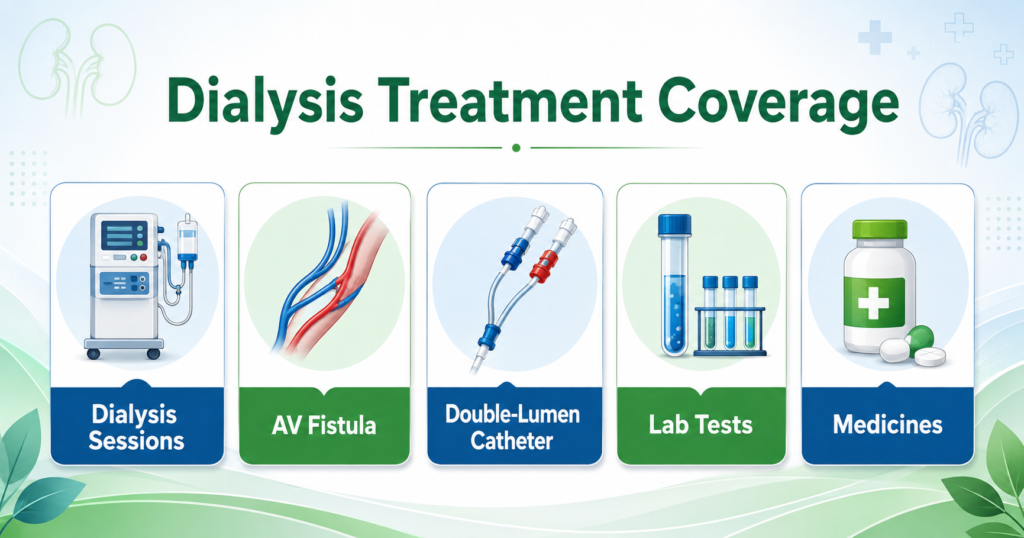
The remaining Rs 150,000 is reserved for approved associated medical services. According to PHIMC, these can include:
- AV fistula procedures
- Double-lumen catheter placement
- Relevant laboratory tests
- Approved medicines
- Other covered dialysis-related medical requirements
Patients should confirm the exact coverage with the hospital before undergoing a procedure. The package should not be understood as a cash grant paid directly to the beneficiary. It is treatment coverage used through approved healthcare facilities.
What Is the CM Punjab Dialysis Card?
The CM Punjab Dialysis Card serves as the patient’s identification within CMSIDP. It is linked with the beneficiary’s CNIC and medical treatment history, allowing approved facilities to confirm eligibility and document the treatment provided.
The card system supports:
- Faster patient verification
- Cashless access to covered services
- Recording of dialysis sessions
- Monitoring of the annual treatment package
- Continuity of care between participating facilities
- Transparent payment and programme oversight
Patients should keep the card and original CNIC safe. They should never hand these documents to an unauthorised agent or disclose verification codes, banking PINs or unnecessary personal details.
Eligibility Criteria
The official programme overview gives a broad and inclusive eligibility condition. A patient should be:
- A permanent resident of Punjab.
- Able to establish Punjab residency through a valid CNIC.
- A kidney patient who has been medically advised to receive dialysis.
- Registered and verified through the programme’s approved process.
Although medical reports are logically required to confirm the need for dialysis, PHIMC’s short official overview does not publish a detailed stage-by-stage medical eligibility list. Therefore, patients should take their reports to an empanelled dialysis facility for assessment instead of relying on unofficial websites or agents.
The programme overview does not mention an upper age limit. Both male and female residents needing dialysis can seek guidance from an approved centre.
Documents to Prepare
Applicants should keep the following documents ready when visiting a hospital or seeking registration assistance:
- Original valid CNIC
- Copy of the patient’s CNIC
- Punjab address or residency information
- Recent kidney-function test reports
- Previous dialysis records, if available
- Nephrologist’s prescription or referral
- Hospital discharge summary, where applicable
- Patient’s active mobile number
- Details of an attendant or emergency contact
- Any existing health or dialysis card
Requirements may vary according to the hospital and the patient’s case. Call the facility beforehand to avoid unnecessary travel.
How to Apply for the CM Dialysis Program
The official PHIMC material confirms the issuance of identification cards but does not present a public, self-service online application procedure. Therefore, patients should use the following safe route:
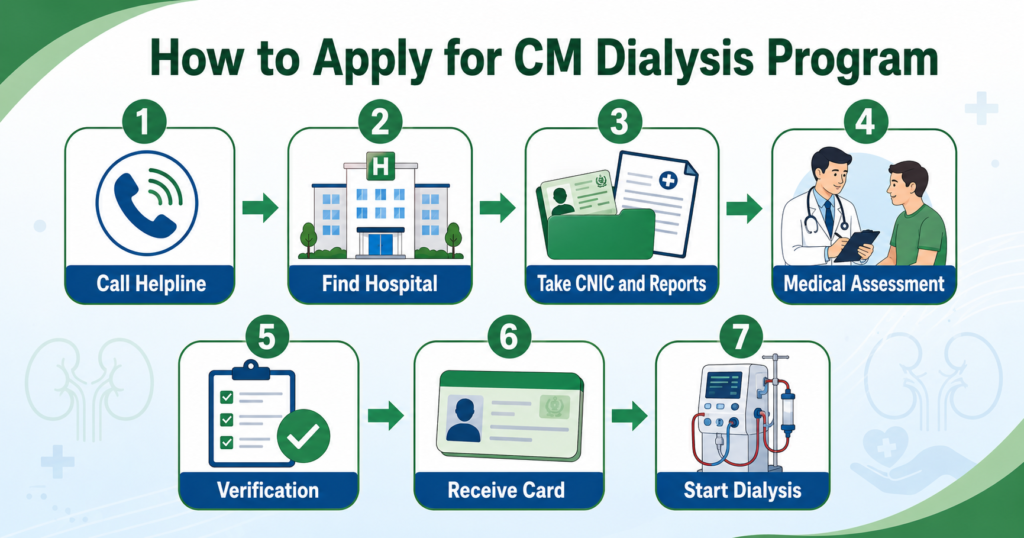
Step 1: Call the Official Helpline
Contact the CMSIDP helpline and ask for the nearest empanelled dialysis centre. Confirm its address, registration timings and document requirements.
Step 2: Visit an Approved Facility
Take the original CNIC, medical reports, dialysis history and referral to the recommended hospital or dialysis centre. Critically ill patients should ask whether an attendant can complete part of the documentation.
Step 3: Complete Medical Assessment
The hospital will review the patient’s diagnosis and need for dialysis. Additional kidney-function tests or a consultation with a nephrologist may be required.
Step 4: Submit Patient Information
Hospital or programme staff will enter the patient’s personal and medical details into the relevant system. Ensure that the CNIC number, mobile number and address are entered correctly.
Step 5: Verification and Card Issuance
After the required verification, an eligible patient can be issued a Dialysis Identification Card linked to their CNIC and treatment record.
Step 6: Begin Treatment
The patient can receive approved dialysis and related services at the assigned or participating facility according to the doctor’s treatment schedule.
There is no need to pay an agent to arrange registration. If anyone demands money for a supposedly guaranteed card, verify the matter through the official helpline.
Public and Private Hospitals Covered
CMSIDP operates through more than 215 empanelled healthcare facilities, including government and registered private hospitals. The network is intended to improve geographical access so patients can receive regular treatment closer to their districts.
Because the list can expand or change, patients should check the current official PHIMC list of empanelled hospitals or call the helpline. Do not assume that every private dialysis clinic accepts the card.
People living far from specialist hospitals may also find our [Punjab Air Ambulance Service] guide useful for understanding Punjab’s emergency patient-transfer initiative. An air ambulance is intended for qualifying emergency transfers and is not a substitute for routine travel to dialysis appointments.
Helpline and Contact Information
Patients can use the following numbers for assistance:
- 24-hour toll-free helpline: 0800-09009
- Additional contact: 0333-6756390
- Office contact: 042-99066000
- Office contact: 042-99066001
- Displayed office timings: 9:00 AM to 5:00 PM
Callers can ask about registration, nearby hospitals, card-related problems and availability of participating dialysis centres.
People who need broader government assistance for medicines, hospital facilitation or other emergencies can also consult [Maryam Ko Batayn 2026: Call 1000 for Free Help].
Monitoring and Patient Protection
The programme is managed by PHIMC through monitoring systems intended to support transparency and accountability. CNIC-linked records make it possible to record dialysis sessions and follow the use of each patient’s treatment package.
Patients can help prevent misuse by:
- Visiting only officially empanelled hospitals.
- Checking every document before signing it.
- Keeping treatment receipts or session records.
- Never paying an unauthorised registration agent.
- Reporting demands for illegal fees.
- Never sharing OTPs, PINs or banking information.
- Calling PHIMC when a listed service is refused without explanation.
The government pays for approved services under the programme. Patients should ask for a written explanation if a hospital requests payment for a service they believe is included.
Other Support for Financially Vulnerable Families
Kidney disease can affect an entire household’s finances. Alongside medical assistance, eligible families may explore other welfare programmes. Our [Ehsaas Rashan Program] guide explains food-support registration, while the [Ehsaas Emergency Cash Program: Rs 12,000 Complete Guide] provides historical information about emergency assistance and 8171 verification.
Families displaced or financially affected by flooding can also read the [Wazir-e-Aala Punjab Sailab Bahali Program] guide. Each programme has separate eligibility rules, so receiving dialysis assistance does not automatically guarantee approval for another scheme.